
Technical Articles and Engineering News
Explore magnetic connector manufacturing, device-specific engineering and industry developments through the technical articles below.
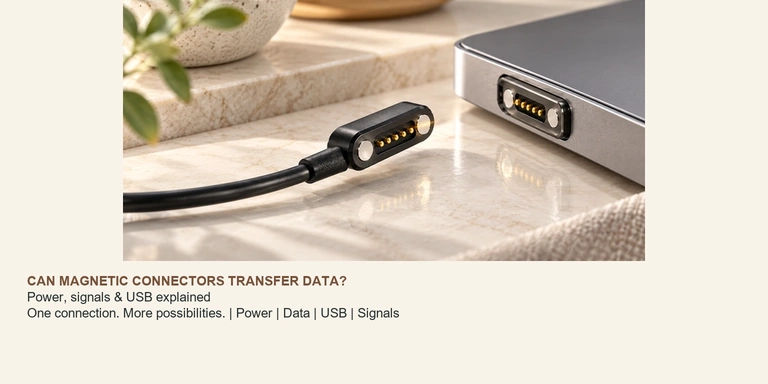
Magnetic Connectors for Power and Data: Designing the Complete Channel
Magnetic guidance positions the mate; conductive contacts carry power, supported USB data or controls. Capability depends on assignments, cable, PCB and implemented protocol. Neither pin count nor a USB-C end alone establishes data transfer.
Read Article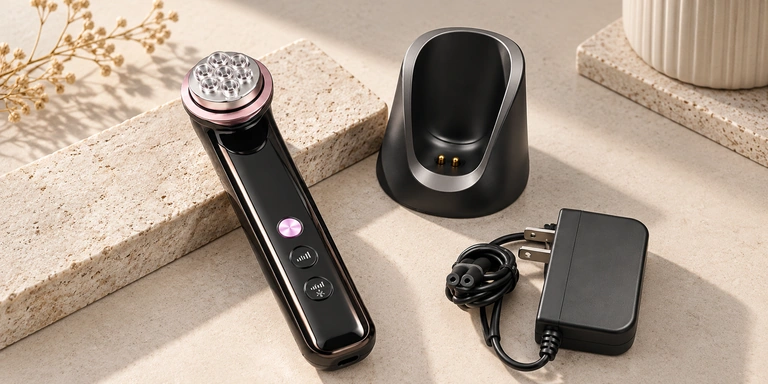
A 2-Pin Pogo-Contact Charging Dock for Beauty Devices
This two-contact dock project specifies DC 9V/1.5A, a 0.90 mm working stroke, 10,000-cycle life and 96-hour salt-spray requirements for compact repeatable drop-in charging. Treat the life and exposure figures as project specifications requiring validation, not supplied test results.
Read Article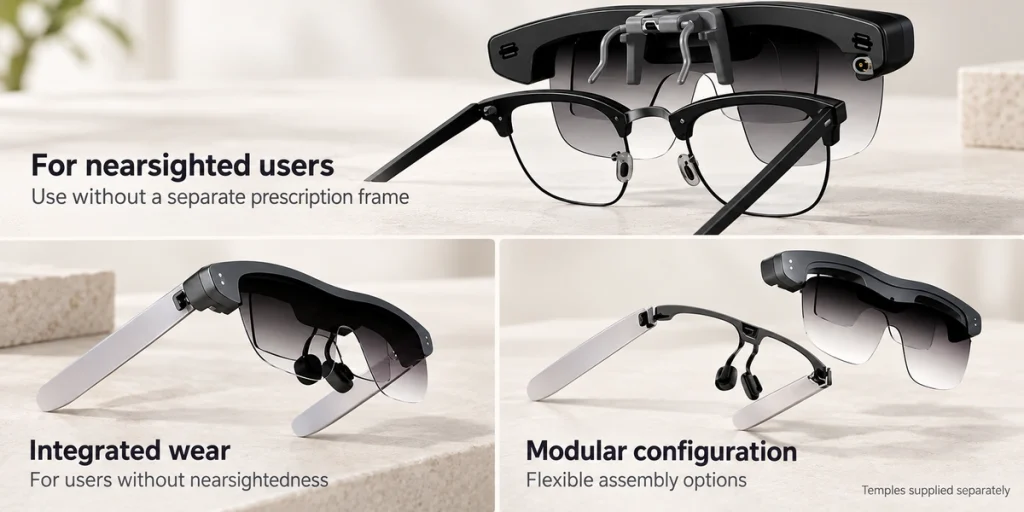
MLVision M5: Designing a Compact 2-Pin Magnetic Charging Interface
The MLVision M5 project uses a compact magnetic pogo interface for lightweight smart glasses. Its specified DC 5V/1A, 0.80 mm working stroke and 10,000-cycle design requirement support the intended repeated-charging design; verify those requirements for the agreed assembly.
Read Article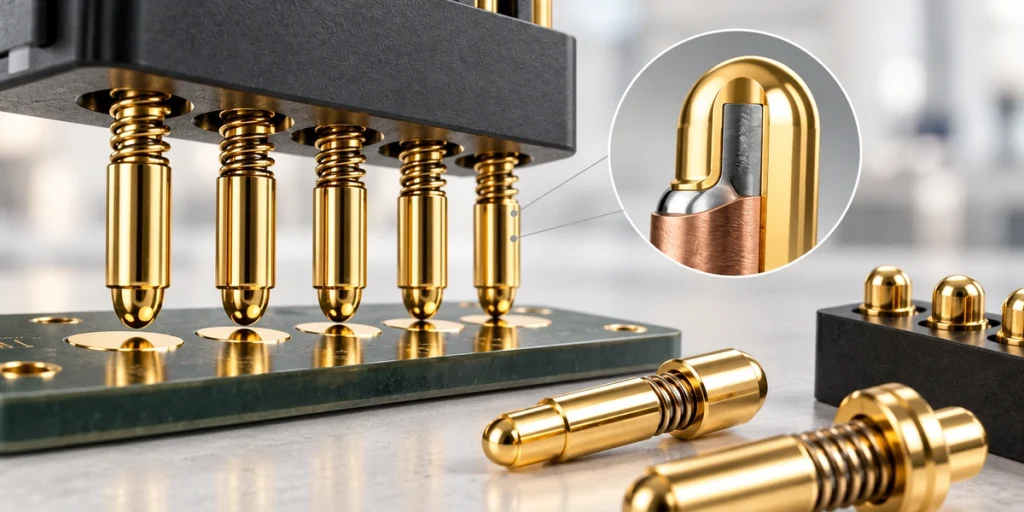
Gold-Plated Electrical Contacts: Benefits, Wear and Design Conditions
Gold's resistance to oxidation can help stabilize resistance at small contact areas in connectors, charging pads and pogo mates. Silver and copper have higher bulk conductivity, but surface stability matters too. The plating stack and actual exposure determine the result.
Read Article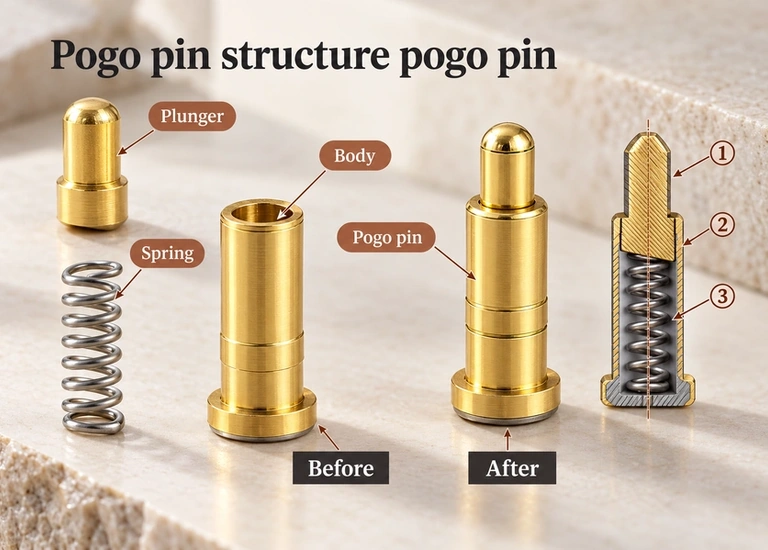
Pogo-Pin Cycle Life: From Rated Cycles to Product Requirements
Specify mating or compression cycles rather than assigning a universal number of years. Examples range from thousands to 100,000+ cycles, depending on design and conditions. Stroke, force, plating, alignment, current and environment all influence durability; no single range is a product guarantee.
Read Article
Checking an Earbud That Will Not Charge
Dirty contacts, poor seating, a stuck charging pin, moisture, low case power or battery trouble may explain one earbud failing while the other works. Check the charging contacts and case by the manufacturer's procedures before deciding that the earbud needs replacement.
Read Article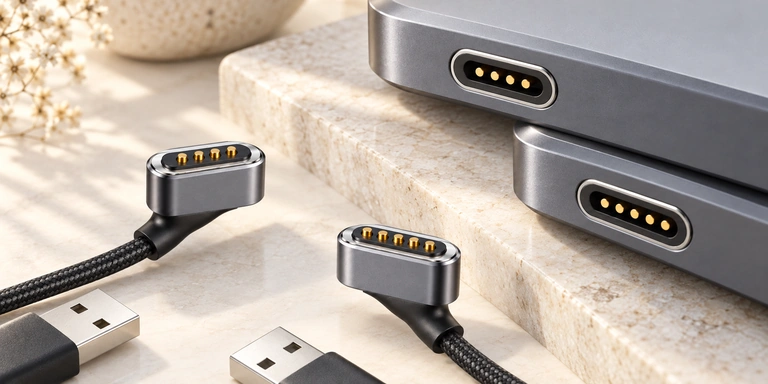
Choosing Between Four- and Five-Contact Magnetic Cables
Five positions add a possible ID, detection, control, data or custom-signal path to a four-contact map. Neither count establishes faster charging or greater power. Select from the independent functions and complete circuit the device requires.
Read Article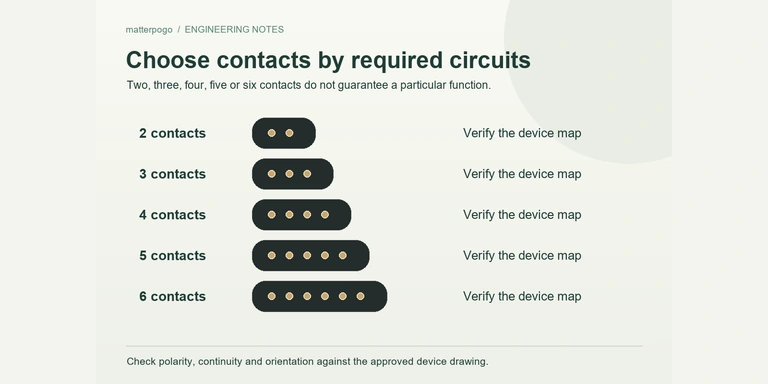
Choosing Magnetic Charging Cable Pin Count from Required Functions
Budget the electrical paths first. Two contacts may provide power and return, while three to six can add detection, ID, controls or data as assigned. More positions do not automatically provide faster charging; each needs a role in the architecture.
Read Article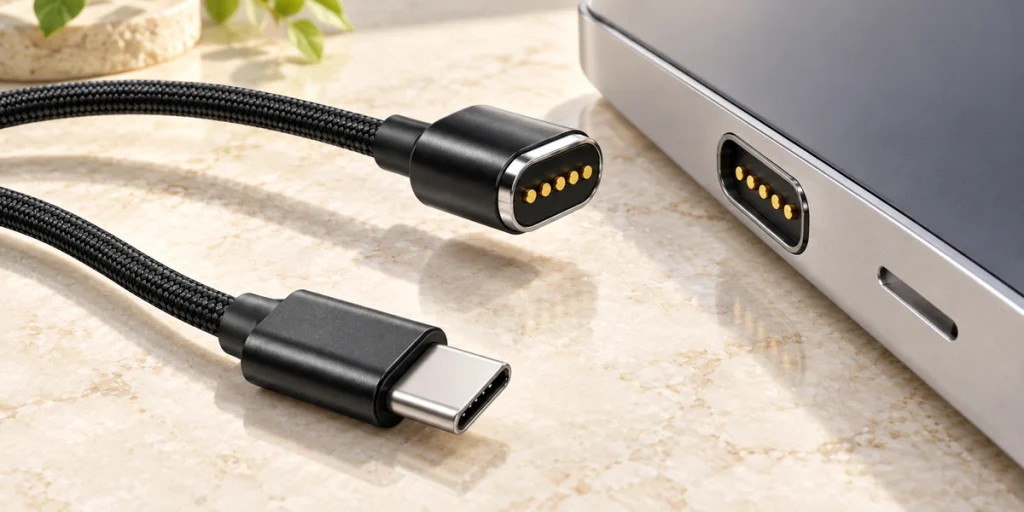
Design Conditions for Data Through a 5 Pin Magnetic Cable
A five-contact magnetic assembly may carry power and data where assignment, wiring, signal type, connector and device circuit support them. Positions can serve power, ground, data, detection or other signals; the count alone establishes no data capability.
Read Article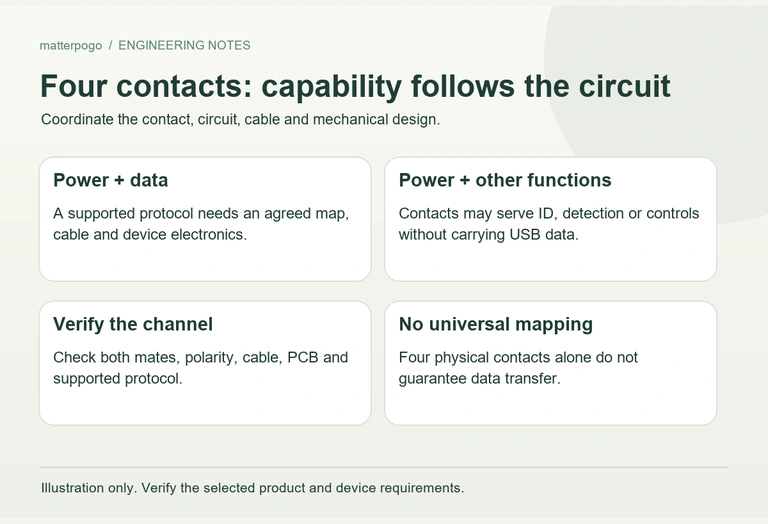
When a 4 Pin Magnetic Charging Cable Can Carry Data
Data transfer requires suitable assignments, conductors, magnetic contacts and device electronics. Four positions can carry both power and signals in an appropriate circuit, but the physical count by itself guarantees neither data transfer nor a protocol.
Read Article