
Technical Articles and Engineering News
Explore magnetic connector manufacturing, device-specific engineering and industry developments through the technical articles below.
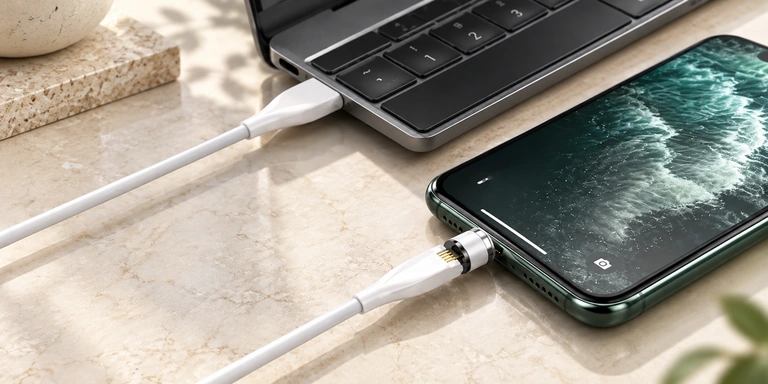
Type-C Magnetic Connections: Architecture, Operation and Design Limits
A Type-C magnetic design may use a detachable adapter in an existing USB-C port, or USB-C on the cable side of a custom device-side pogo mate. Magnetic capture can assist attachment and removal. Distinguish these architectures before evaluating charging or other functions.
Read Article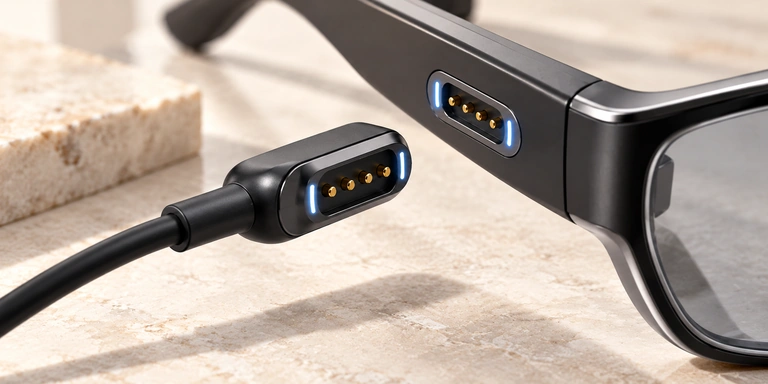
Magnetic Connector Benefits and the Design Conditions Behind Them
Magnetic guidance can assist alignment and quick physical mating, reduce conventional insertion wear, support compact integration and provide designed breakaway. Power and signals depend on the complete path. These options may help frequent charging, docking or limited-space devices.
Read Article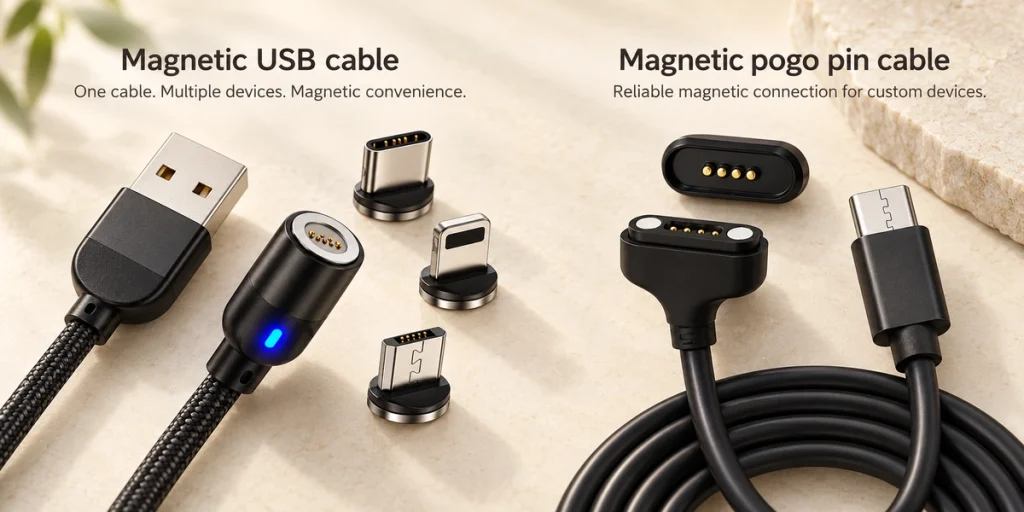
Magnetic USB Adapters and Integrated Pogo Cables: Choosing the Architecture
A magnetic USB adapter attaches to an existing port, while a custom pogo cable mates to a device-specific interface. Compare integration, compatibility, assignment, power and data functions, and OEM customization; both may use spring contacts within their construction.
Read Article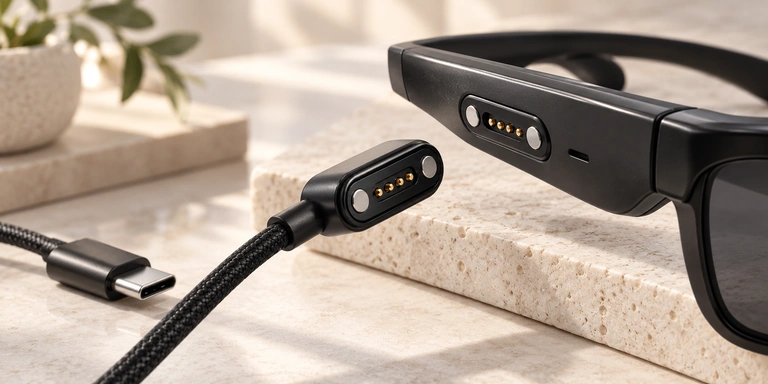
Magnetic Cables: How the Contact System Works and Where It Fits
Magnets guide and retain the cable mate, while touching pogo pins or pads carry power, data or controls. This is a wired architecture, with uses in charging, docking and power or signal connections; magnetism itself is not the conductive path.
Read Article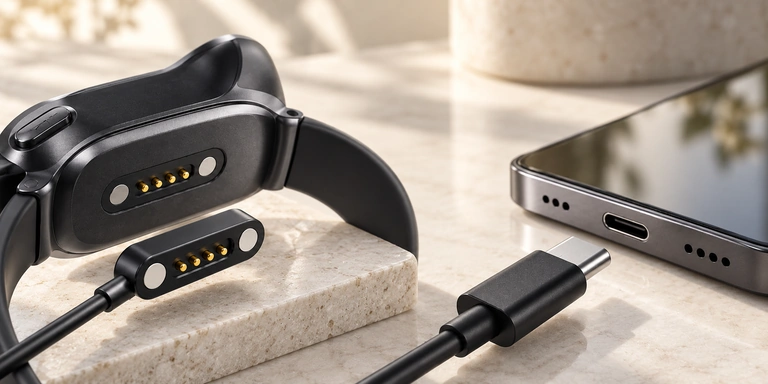
Pogo Pin Charging or USB-C: Which Interface Fits Your Device?
Both use direct conductive contact. Pogo assemblies allow custom geometry, compact installation and optional magnetic guidance; USB-C supplies a standard ecosystem when functions are implemented. Compare size, power, data, sealing and exposure for the device.
Read Article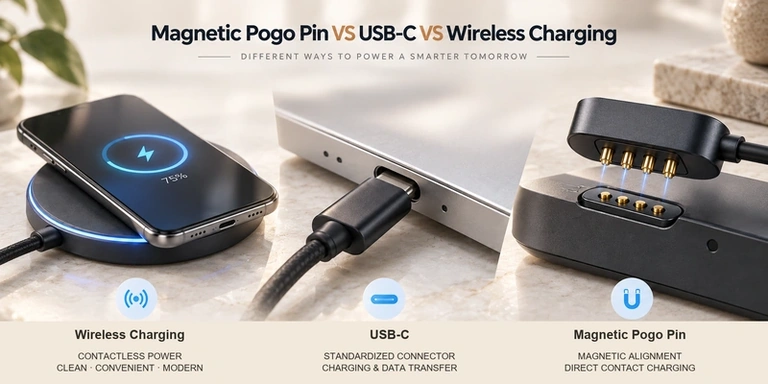
Magnetic Pogo Pin, USB-C or Wireless Charging: Choosing for Your Device
Magnetic pogo contacts conduct directly with magnetic guidance; USB-C uses a standard conductive mate; wireless power crosses without exposed charging contacts. Compare power, data, size, sealing, compatibility and handling when selecting the architecture.
Read Article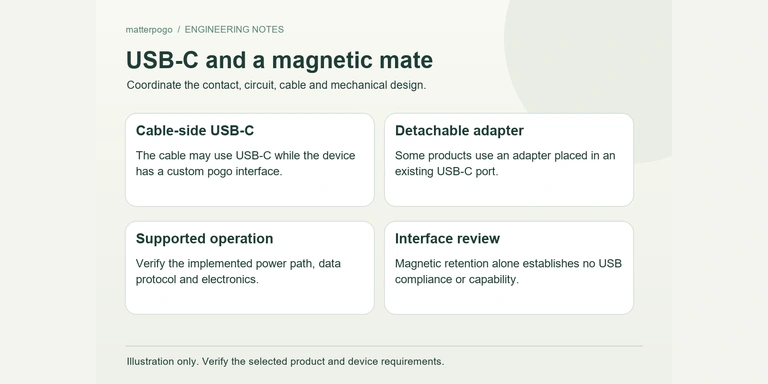
Charging Docks and Magnetic Cables: Choosing for the Device's Use
A dock positions the device on a fixed platform, while a magnetic cable provides a more portable connection. Either may combine magnetic guidance and pogo contacts. Compare positioning, portability, cable motion, enclosure, sealing and intended operation.
Read Article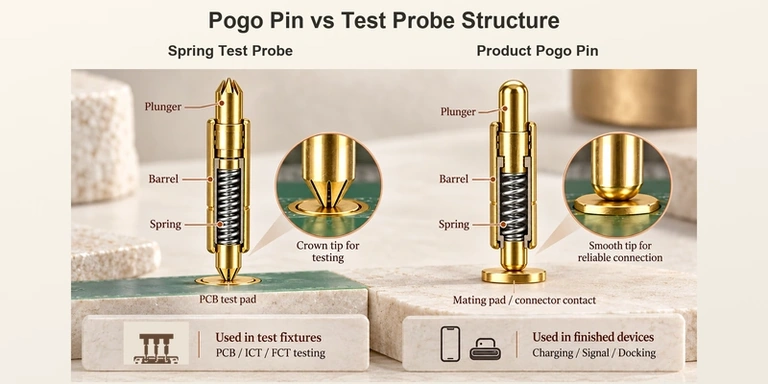
Pogo Pins and Spring Test Probes: Selecting for the Intended Task
Both can contain a plunger, barrel and spring. Device pogo contacts commonly serve charging or signals, while spring test probes make temporary repeated contact during PCB testing. Application and integration distinguish them rather than the spring structure alone.
Read Article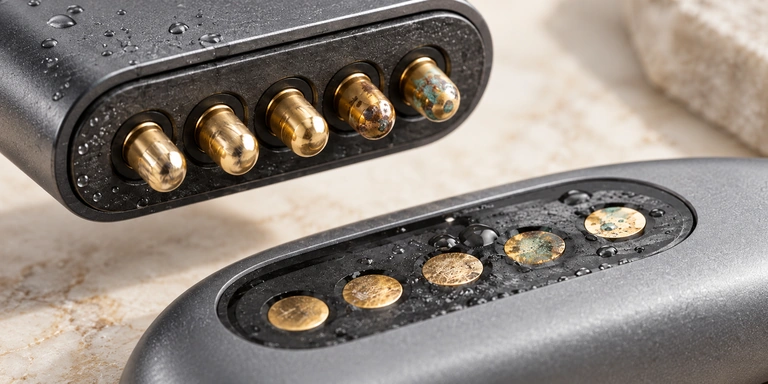
Pogo-Pin Limitations and How to Address Them in a Contact System
Spring contacts may encounter wear, corrosion, fatigue, changing resistance, alignment constraints and current limits in charging or signal service. Suitable stroke, force, plating, contact design and environmental protection can reduce those risks when validated for the application.
Read Article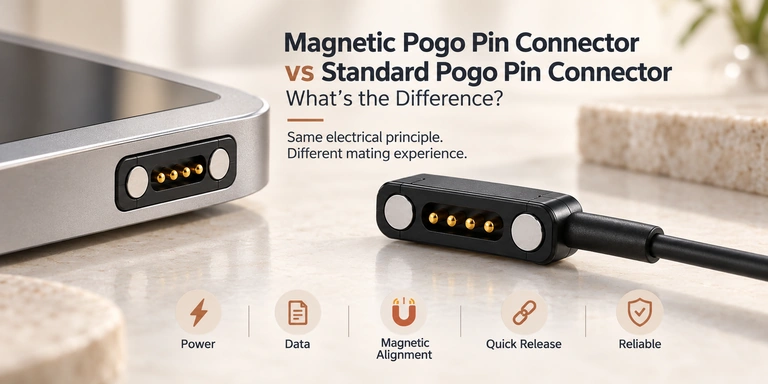
Magnetic and Standard Pogo-Pin Connectors: Choosing the Mating System
The same spring-contact principle can be combined with mechanical locating features or magnetic guidance. Magnetic capture may assist docking and designed release. Compare stroke, retention, mating frequency and device requirements rather than ranking the names.
Read Article