
Three-contact Magnetic Interface for a Modular Digital Piano
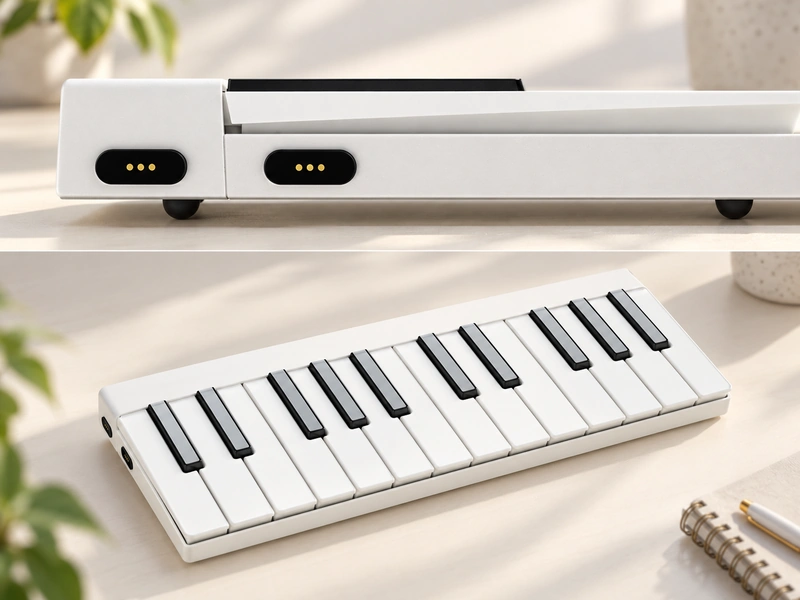
A three-contact magnetic assembly can link adjacent keyboard sections without an external interconnection cable. In this POP PIANO application, the interface is fitted into each module’s side so that additional sections can be joined as the required key count increases. The device’s electrical assignment must define the functions of the three paths.
Three-contact magnetic connectorIntegrated Module Connection
No External Interconnection Cable
17 Years of Manufacturing Experience
Custom Design and Prototypes
- Home
- Applications
- Three-contact Magnetic Interface for a Modular Digital Piano
A Connection for an Expandable Keyboard
The POP PIANO example uses an expandable keyboard architecture. A beginner can start with a compact section and add modules as more keys are needed, rather than replacing the complete instrument. The magnetic contact assembly is one component of the electrical and mechanical system that enables this approach.
Module-connection Design Requirements
The connection must balance mechanical positioning, convenient assembly and the available space. Evaluate candidate interfaces against the piano’s industrial-design requirements rather than assuming every conventional connection would fail.
Accurate Positioning
The adjoining sections need correct alignment so that the key surfaces sit flush and the keyboard can operate as designed.
Cable-free Interconnection
An external cable between sections would affect handling and the exterior. Integrating the interface into the sides addresses that design requirement.
Repeated Assembly and Storage
The mating interface needs a defined life for users who assemble, separate and store the sections repeatedly.
Connecting the Keyboard Sections
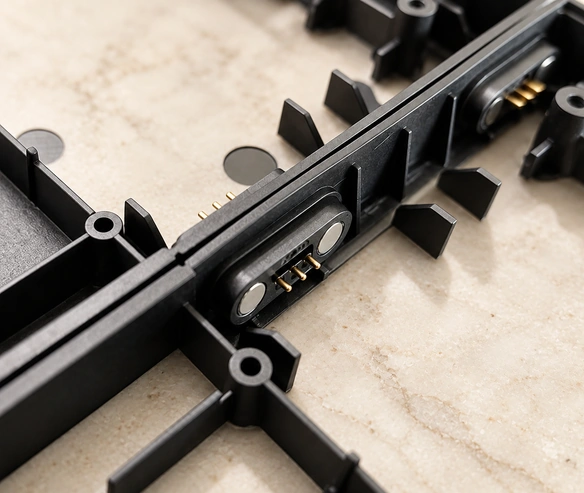
As the sections approach one another, magnets assist positioning and the locating geometry establishes seating. The three conductive contacts then make the electrical paths assigned by the piano design. Verify mechanical fit and electrical engagement together.
Position the Sections
Bring the side of the additional section toward the existing keyboard arrangement.
Magnetic Guidance
The magnetic arrangement guides approach within its capture range. Housing and locating features must establish the required alignment; attraction alone does not guarantee a perfect fit.
Engage the Contacts
The three gold-colored contacts meet to establish the assigned circuits between sections without an external interconnection plug. The appearance alone does not confirm plating composition or an electrical rating.
Integration into the Side Housing
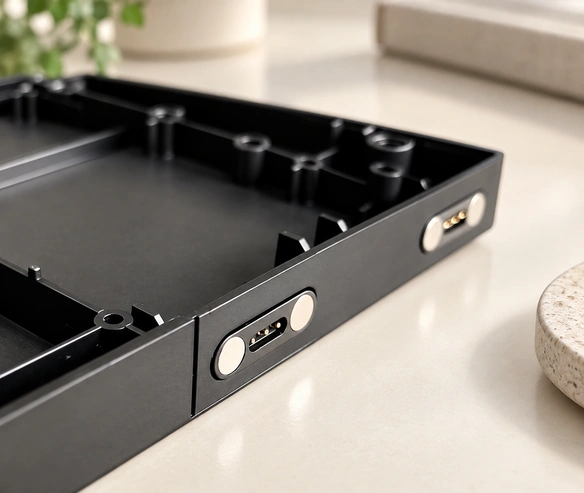
The custom black connector housing is recessed into the module’s side, placing the interface within the piano’s mechanical envelope.
Custom magnetic interfaceThe contact area forms part of the enclosure architecture. When the sections are separated, a conventional plug does not protrude from the side, helping retain the intended exterior profile.
Reasons to Consider Magnetic Attachment
Magnetic Guidance
Magnetic guidance can assist the approach of adjacent sections while mechanical locating features define their seated position.
Quick Section Attachment
The arrangement avoids inserting a separate conventional plug or routing an external interconnection cable between adjacent sections.
Repeatable Assembly
Sections can be attached, removed and stored. Verify that the interface meets the required repeated-use life rather than assuming reliability for an unspecified period.
Compact Side Interface
Placing the connector inside the enclosure avoids allocating space for a separate external cable connection.

1 / 2
Expanding the Keyboard as Needs Change
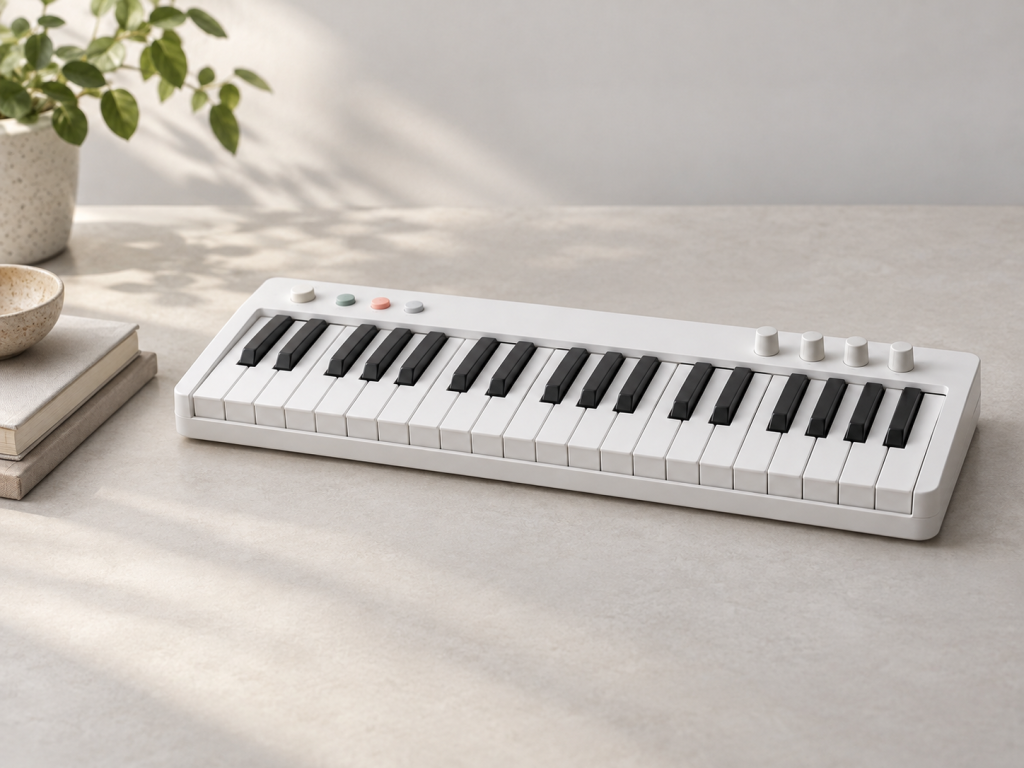
One compact module can be retained while more sections are added to increase the key count. The magnetic connector supports the physical interface, while the piano’s circuitry and controls must support the expanded arrangement.
The POP PIANO Modular Application
Application photographs illustrate the modular instrument and its side-mounted interface in demonstrations and use. They describe this application, not proof that every user can configure every variant without instructions. Third-party identity in the media remains subject to the publication review.
Physical keyboard demonstration
Users demonstrating modular expansion
Side-housing connector integration
Application Design Specifications
Custom Three-contact Interfaces for Other Devices
Magtor can assess a similar module-connection concept for another enclosure. Define the device’s electrical and mechanical conditions before selecting the spring contacts, housing and magnetic arrangement.
Other Candidate Uses for This Concept
Related modular-interface concepts may be evaluated for:
Modular control panels.
Educational electronics.
Detachable display modules.
Docking accessories.
Manufacturing Capabilities
Connector Verification
A project-specific validation plan can include:

17 Years of Connector Manufacturing
Our connector-development team can assess the application requirements,

Manufacturing Facility
Our centralized company information records 185 employees, 12 members of the R&D team and approximately 12,000m² of factory area. The engineering team supports project assessment and development.

Production Equipment
Technical staff and production equipment support process consistency. Define acceptance criteria and verify the required connector performance instead of claiming superiority from equipment alone.
Inspection and Tests
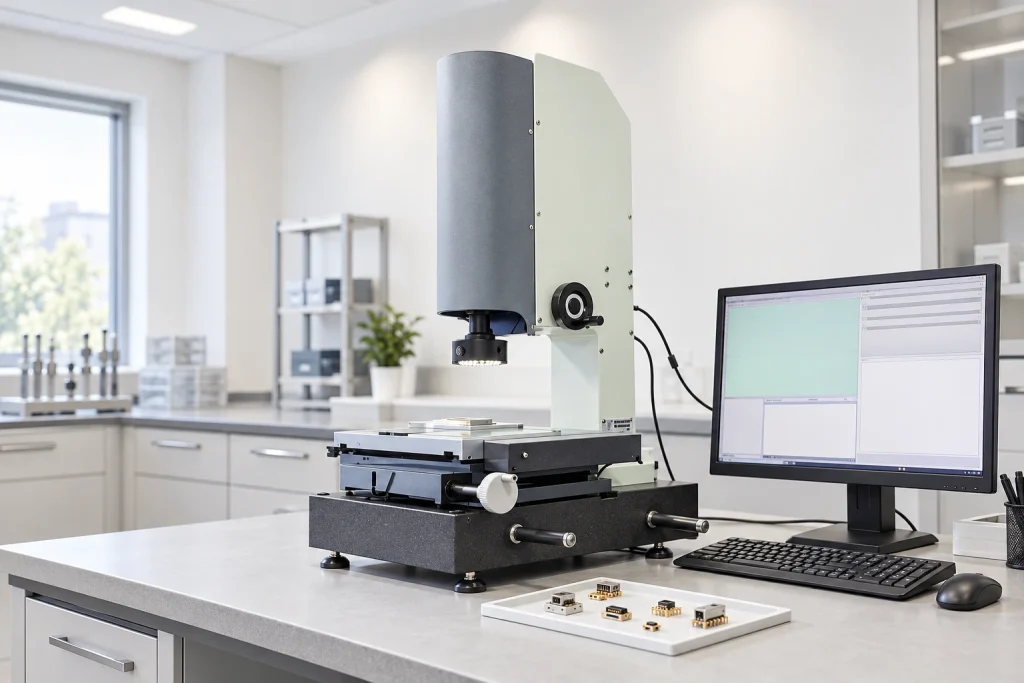
Inspection may include mating life, plating thickness, spring-force characteristics, applicable RoHS substance requirements and CCD vision checks. The test plan and sampling scope depend on the product and project requirements; this does not mean every connector receives every destructive test.
Engineering Review
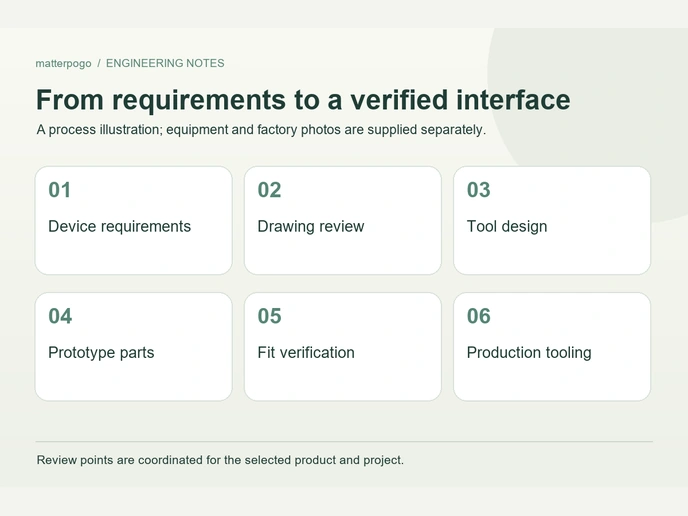
Technical engineers review the electrical and mechanical requirements of each proposed solution. Confirm the assigned team and validation plan for the project; the separate head-count descriptions do not establish a larger R&D team than the central company record.

Automated Production
17 years of manufacturing experience support solution development and production planning, with technical assistance and a response schedule agreed for the project.
Common Questions
Can a Similar Interface Be Designed for Another Digital Piano?
Can the Contact Allocation or Count Be Changed?
Can the Assembly Carry Both Power and Signals?
Can the Interface Fit an Existing Enclosure?
What Details Are Needed for an Evaluation?
Planning a Modular Device?
Share the drawing, connector envelope, contact needs and electrical conditions with Magtor. Our engineers can assess a magnetic spring-contact assembly around the enclosure and its mating structure.