
Reducing Corrosion Risk at Wearable Charging Contacts
Published on September 7, 2026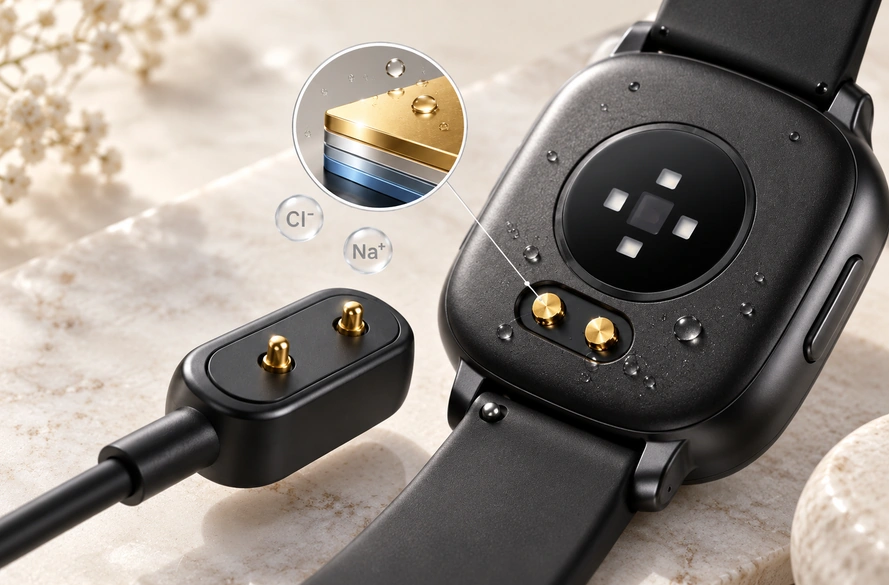
- Why Wearable Contacts Face Corrosion
- Sweat and Electrochemical Reactions
- Materials and Plating Selection
- Interface Geometry and Corrosion Risk
- An Application-Based Test Program
- Controls for Wearable Development
Sweat, moisture, salts, plating wear and electrochemical reactions can damage wearable charging contacts. Suitable plating, stable pressure, drainage and sweat or powered-electrolysis validation can reduce the risk; no single measure guarantees prevention.
Why Wearable Contacts Face Corrosion
Exposed wearable contacts often face harsher conditions than connectors protected inside electronics.
A watch or fitness tracker can remain against skin for hours during exercise, sleep and daily activities. Sweat, water, skin oils, cosmetics and dust may collect around its pads. Compact housings also tend to leave little contact spacing or room for drainage.
Sweat is more than water: dissolved electrolytes, including sodium and chloride ions, make it conductive. Wearable sweat-sensing research measures selected perspiration components, but a sensing study is not itself a charging-contact corrosion test.
sodium and chloride ionsThe wearable manufacturer’s wearable care instructions provide a practical example: keep charging contacts clean and fully dry before connecting the cable. Follow the instructions for the particular device.
For developers, care instructions supplement the interface design. The contacts should be engineered for realistic exposure in normal use rather than relying on cleaning as the primary protection.
Sweat and Electrochemical Reactions
Electrochemical or electrolytic corrosion can be an important mechanism when moisture, conductive contamination, exposed metals and a potential difference occur together.
Consider this typical two-contact arrangement:
V+ → charging contact → device. GND → charging contact → device.
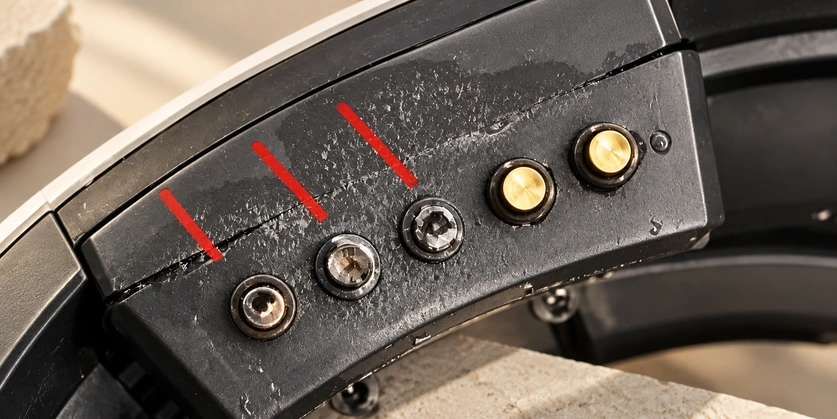
Sweat retained around or between contacts can become a conductive electrolyte. During charging, a DC potential between those contacts may drive reactions at their metal surfaces.
The background of a published wearable-charging patent describes retained sweat or seawater acting as an electrolyte during DC charging. It explains how exposed contacts can act as an anode and cathode in electrolytic corrosion; this background discussion is not a test of a particular connector.
Possible effects over time include:
Discoloration, deposits, plating damage, increased resistance, intermittent charging or eventual failure.
Connecting wet contacts after exercise, swimming or similar activity can increase the risk. Dry the interface as directed before charging rather than treating water protection as permission to charge it wet.
Evaluate sweat and electrolysis resistance separately from the enclosure's water protection.
Materials and Plating Selection
Plating helps protect contacts, but the full layer structure matters more than a clean-looking surface.
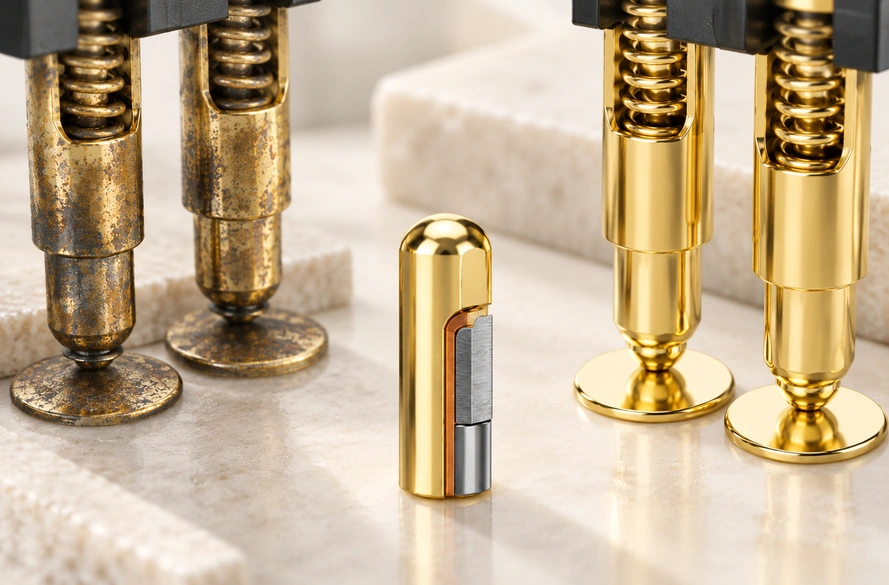
Pins and pads generally combine a conductive base with intermediate and surface layers. Gold is often used for conductivity and resistance to surface oxidation, but its plating is not a permanent barrier under every condition.
Over repeated charging connections, potentially thousands of cycles in an intended application, sliding and compression can wear the surface layer. Pores, scratches and worn regions may expose underlying metals to sweat and chloride contamination; that cycle count is not a universal life rating.
Review these plating factors:
Materials and layer structure
Plating thickness
Porosity
Wear resistance
Underlying barrier layers
Expected mating-cycle count
Sweat and electrochemical exposure
For a wearable project, Magtor can assess multilayer or composite plating rather than applying a single coating approach to every contact. The materials and stack should be selected and validated for sweat, electrochemical exposure and repeated wear.
This assessment is particularly relevant to watches, fitness trackers and other skin-contact devices with repeated perspiration exposure.
Choose the finish for its operating environment, not only for appearance or the initial resistance reading.
Interface Geometry and Corrosion Risk
Plating cannot address every cause of corrosion. Mechanical geometry and electrical behavior also need review.
Recesses, narrow gaps and poor drainage can retain sweat. Where the required enclosure design allows, provide routes for liquid to drain or evaporate instead of remaining between V+ and GND.
Fit contact spacing and location to the available space while avoiding unnecessary geometry that lets conductive liquid bridge adjacent pads.
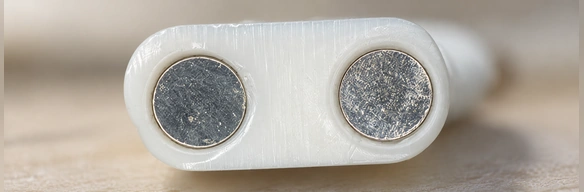
Set working stroke and force for stable contact pressure without excessive wear. Inadequate compression can destabilize charging; excessive load may wear the plating more quickly.
Magnetic guidance can reduce the need to slide or force the head into place by helping align it with the device contacts. It does not remove all contact wear.
For charging alone, a 2 Pin Magnetic Charging Cable can use V+ and GND in a compact pogo interface. Magtor can configure pitch, polarity, magnet orientation, dimensions and housing fit around the product rather than requiring a fixed cable layout.
2 Pin Magnetic Charging CableMagtorKeep enclosure water protection and contact corrosion resistance distinct.
An IP-rated enclosure may protect the internal electronics from ingress under its specified conditions while leaving the charging contacts exposed. Consequently:
IP-rated enclosureA water-resistant wearable is not automatically resistant to contact corrosion.
Assess housing seals, contact materials and electrochemical resistance as separate requirements.
An Application-Based Test Program
Define connector tests around the finished product's actual use conditions.
Salt spray can assess aspects of material and plating corrosion. Some two-contact cable configurations list a 48-hour salt-spray requirement; confirm the applicable configuration, conditions and report before treating it as a verified result. Salt spray alone does not reproduce all wearable failure mechanisms or establish service life.
salt spray test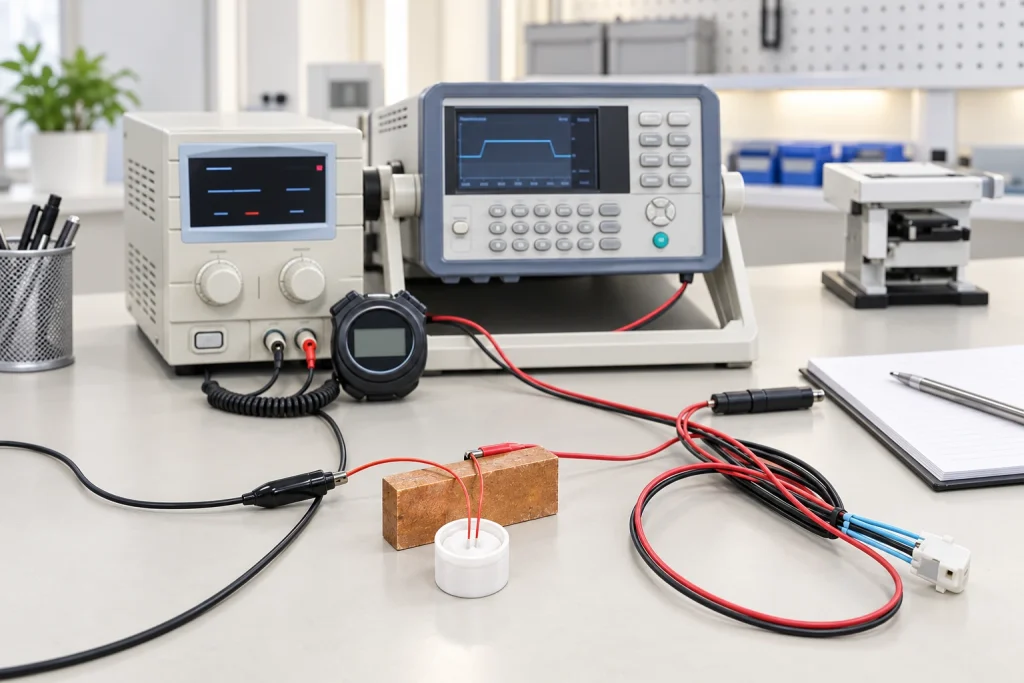
For skin-contact products, artificial sweat can provide controlled exposure to salts and related contaminants. Define the solution and test conditions for the intended application.
A controlled laboratory powered-electrolysis test applies voltage while artificial sweat or a defined electrolyte is present at the contacts, rather than assessing only unpowered immersion. It can investigate the wet-contact charging mechanism; it is a professional validation procedure, not an instruction for users to charge a wet device.
A validation program may combine salt spray, artificial sweat, powered electrolysis, mating cycles, resistance measurements, spring-force checks and plating inspection before and after exposure.
Compare electrical behavior, including contact resistance, before and after exposure. Appearance alone cannot determine whether corrosion is impairing charging reliability.
Controls for Wearable Development
Use materials selection, mechanical design and electrical validation together to control corrosion instead of relying on one protective feature.
First define contact locations and the frequency of sweat exposure. Select plating for expected corrosion and wear, then coordinate force, stroke and geometry for consistent mating.
Reduce liquid-retaining areas in the housing. Where needed, an appropriate sealing structure can protect internal electronics while the exposed interface uses plating selected for its corrosion environment.
Review electrical behavior under wet-contact conditions in a controlled validation program, because DC potential across an electrolyte can promote corrosion. Dry laboratory measurements alone do not cover that mechanism.
Develop the cable and device connector as a matched interface.
A Magnetic Cable Connector can combine guided docking with spring contacts and be specified for contact count, polarity, magnetic force, cable direction and housing requirements. Magtor can assess assemblies ranging from charging-only interfaces to multi-contact power and signal layouts.
Magnetic Cable ConnectorFor watches, trackers and similar charging-only devices, two contacts may suffice when assigned to power and ground. Add paths for data, ID detection or control according to the electrical architecture when those functions are required.
Controlling Corrosion Across the Interface
Begin corrosion control by understanding the wearable's operating environment.
Sweat can leave a conductive electrolyte, and repeated mating stresses the plating. Moisture, DC potential and exposed metal together can increase electrochemical corrosion risk.
Combine suitable corrosion-resistant finishes, contact pressure, liquid management, geometry and sweat or electrolysis validation for the charging interface.
Design these features around the wearable rather than assuming fixed connector specifications. Watches, fitness trackers, smart rings and other compact devices need to balance size, frequent charging and prolonged sweat exposure.