
Designing a 2 Pin Magnetic Charging Cable for a Smartwatch
Published on September 3, 2026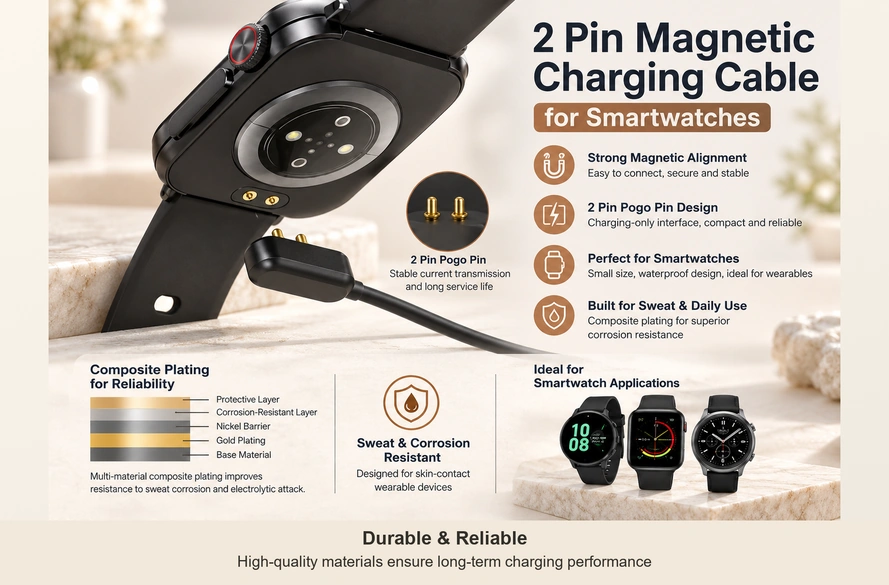
- How Two-Contact Watch Charging Works
- Why the Interface Can Suit Wearables
- When Two Contacts Are Sufficient
- Specifications to Confirm
- Sweat Exposure and Contact Protection
- Selecting a Cable for a Watch Design
A 2 pin magnetic charging cable can provide a compact interface that guides itself into position on a smartwatch. For wearable reliability, assess pitch, polarity, magnetic force, contact resistance and sealing, and consider a composite plating structure against the expected sweat and electrochemical corrosion conditions.
2 pin magnetic charging cableHow Two-Contact Watch Charging Works
A typical arrangement pairs a magnetic cable head with two conductive contacts on the watch.
A common assignment for those contacts is:
| Pin | Typical Function |
|---|---|
| Pin 1 | Positive power (V+) |
| Pin 2 | Ground (GND) |
Scroll horizontally to view every column.
Magnets help align the head, and spring-loaded pogo pins press against the watch pads to establish the electrical connection.
pogo pins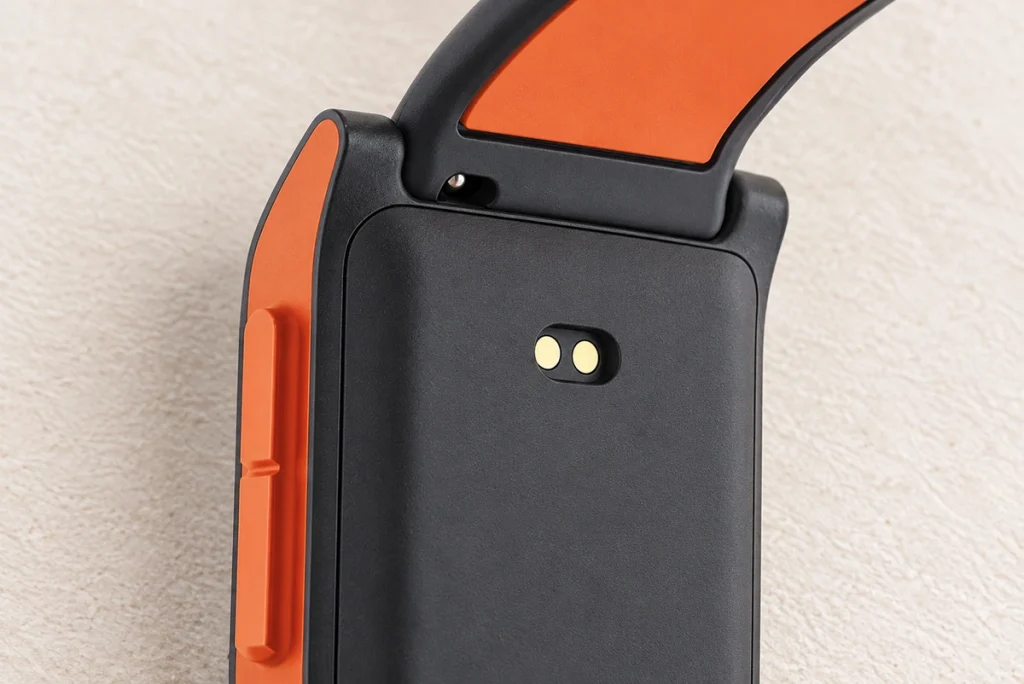
Two contacts can occupy less space than many plug-in connectors and suit wearables that need charging alone. Contact count does not define compatibility: match polarity, pitch, voltage, current, dimensions and magnetic orientation to the watch.
Magtor 2 Pin Magnetic Charging Cable assemblies can be configured with the required pitch, polarity, length, wire gauge and magnetic layout, using USB-A, USB-C or bare-wire ends for OEM integration.
MagtorUSB-A, USB-CWhy the Interface Can Suit Wearables
A watch has different packaging constraints from a phone or laptop. Its battery, sensors, PCB, vibration motor, wireless components and other electronics compete for a small amount of enclosure space.
PCBFor a frequently charged device, magnetic guidance can make docking convenient: bringing the head near the watch back helps bring the mating contacts into position.
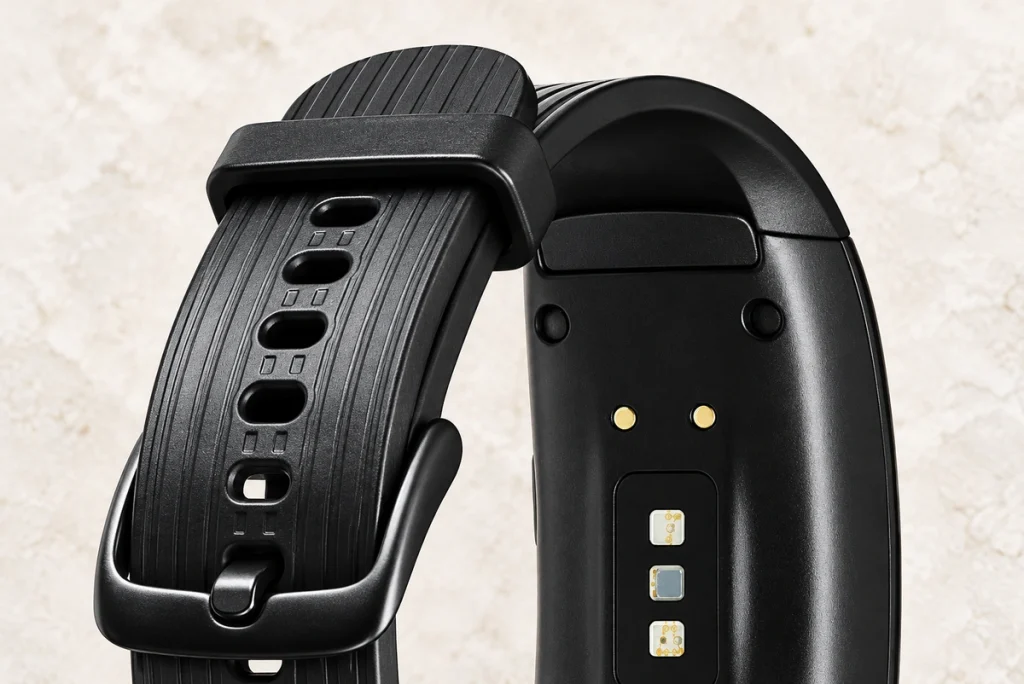
Depending on the design, practical benefits can include:
Convenient one-handed docking
Less repeated insertion wear
Quick connection and removal
Compact contacts on the device
Integration into a sealed wearable housing
These features can suit smartwatches, sports watches, fitness trackers, children's watches and other compact wearables when their requirements match the interface.
When Two Contacts Are Sufficient
A watch requiring only external charging will often need just two conductive paths.
One path can carry positive power and the other ground. This arrangement keeps the interface compact and limits the contacts that must fit into the watch housing.
Other wearable architectures may need a different arrangement.
Device detection, communication, programming, data transfer or additional control signals may require extra contacts at the charging interface.
| Device Requirement | Possible Interface |
|---|---|
| Charging only | 2 Pin |
| Charging + detection | 3 or 4 Pin |
| Charging + communication | 4 or 5 Pin |
| Multiple power and signal functions | Multi-pin |
Scroll horizontally to view every column.
Let the electrical architecture determine contact count instead of choosing solely for minimum connector size.
The wider Magtor Magnetic Cable Connector range includes 2–16 contact configurations for charging, power, signals and ID detection, with functions assigned to the device's needs.
Magnetic Cable ConnectorSpecifications to Confirm
Confirm pitch early: two-contact smartwatch chargers have no universal spacing. The head, watch contacts and housing must agree on their mating geometry.
Specify charging voltage and current as well. A USB-C end does not establish USB Power Delivery or high-power fast charging at the two-contact interface. Contact current rating, resistance, wire gauge, length and the watch charging circuit determine the available performance.
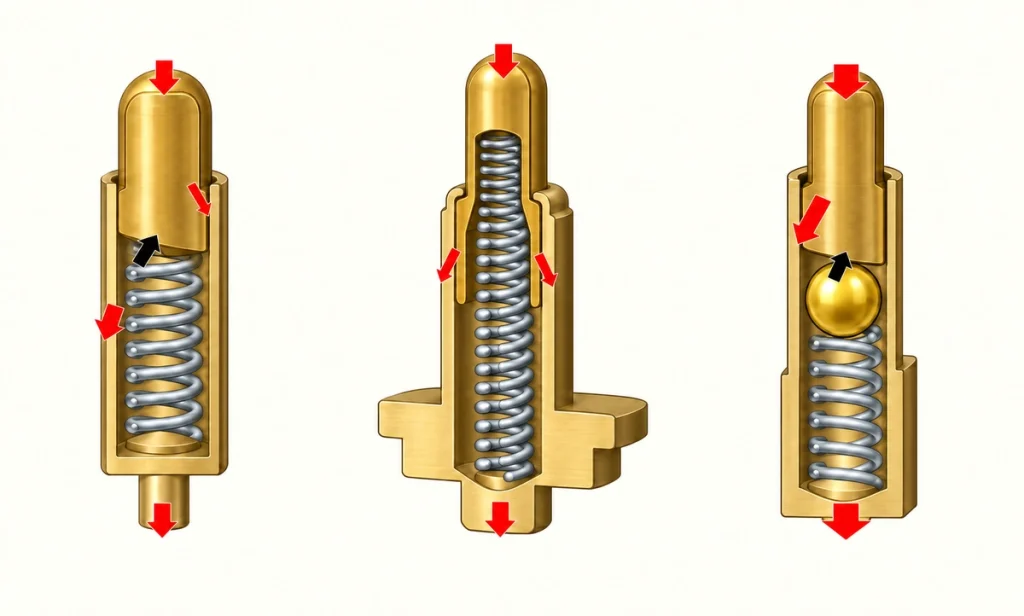
Balance attraction with the intended handling. Too little retention may let watch movement disconnect the cable; too much may make removal awkward.
Also specify:
Pogo pin working height and compression
Contact resistance
Electrical polarity and magnet orientation
Cable length and conductor gauge
Connector dimensions
The sealing structure
Contact plating
Repeated exposure to sweat and skin moisture makes the contact finish an important part of watch interface design.
Sweat Exposure and Contact Protection
Watch contacts sit close to the skin, unlike many connectors elsewhere in electronics. Exercise and daily wear can repeatedly expose the watch back to perspiration, moisture and skin residues.
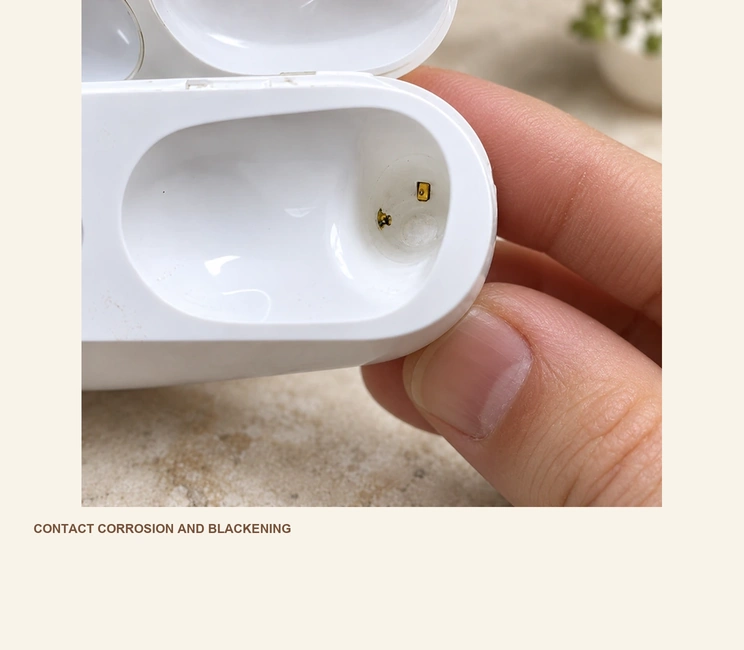
Electrolytes in sweat can create corrosive conditions around metal contacts. Published research on multilayer contacts in artificial sweat identifies coating defects, exposed underlying metals and potential differences between layers as factors in corrosion; it does not establish the performance of a particular watch connector.
As surface corrosion progresses, contact resistance may rise and the electrical connection may become less stable over time.
Composite Plating for the Expected Sweat Environment
Composite plating is one contact-protection option that Magtor can assess for a wearable project.
A combination of plating materials can be selected for the contact surface instead of applying one simple layer to every design. The proposed structure should address these requirements:
Resistance to sweat corrosion, and to electrolytic or electrochemical corrosion under the specified operating conditions.
The aim is to protect the conductive structure while preserving reliable contact through repeated charging cycles.
Applications in which these requirements may matter include:
Smartwatches
Sports watches
Fitness trackers
Smart bracelets
Hearing aids
Other wearables in contact with skin
Select the stack for the customer's corrosion exposure, electrical demands, wear conditions and expected service life. One plating specification should not be assumed appropriate for every device.
When evaluating conductor materials using ASTM test guidance, identify the applicable method and application criteria. Surface pretreatment, plating and corrosive exposure need to be considered when assessing contact performance; the guidance is not proof of a connector's durability.
Selecting a Cable for a Watch Design
Develop the cable and device-side contacts together for a new watch where practical. Comparing the appearance of existing cables alone cannot establish a suitable interface.
Before requesting samples, confirm:
Charging voltage and current
Available connector space
Pitch and electrical polarity
PCBA layout and contact locations
Pogo pin working height
Required magnetic retention force
Water protection requirements
Cable length and wire gauge
USB-A, USB-C or another cable end
Expected sweat and corrosion exposure
For frequent perspiration exposure, consider composite plating and corrosion protection during connector design. Leaving them until corrosion appears in use makes them harder to address.
Magtor can develop two-contact cable assemblies around the existing housing, PCB location, charging demands and environment. Dimensions, electrical polarity, magnetic force, cable construction, sealing and plating can be reviewed and adjusted for the watch design.
Designing for Repeated Wearable Charging
A two-contact magnetic cable can be a practical choice for many watches, combining a compact conductive interface, guided alignment and convenient daily docking.
Contact count alone does not solve the design. Pitch, polarity, current, working height, magnetic retention, sealing and surface protection all contribute to long-term reliability.
Give sweat exposure particular attention in watches and other skin-contact wearables. A suitable composite plating structure can be developed and validated for sweat and electrochemical corrosion resistance while maintaining electrical contact through repeated daily charging.
Questions About Two-Contact Watch Cables
Will any two-contact magnetic charger fit a watch?
No. Pitch, polarity, magnet orientation, voltage, dimensions and contact positions can differ even with two contacts. Confirm these features before replacing a cable or specifying an OEM watch interface.
Can sweat harm the charging contacts?
Yes. Its moisture and electrolytes can produce corrosive conditions at exposed contacts. Corrosion or deposited contamination may eventually raise resistance and make charging less stable.
What can composite plating contribute?
It combines plating materials selected for the operating environment. For a wearable, Magtor can assess and optimize a proposed structure against sweat and electrolytic or electrochemical corrosion requirements, with its effectiveness confirmed by appropriate validation.
Does a USB-C end guarantee fast charging?
No. That identifies the end connector. The pogo pins' current rating, contact resistance, conductor gauge, length and watch charging circuit still determine charging capability.
What should be provided for a custom watch cable?
Specify charging voltage and current, pitch, polarity, installation space, working height, magnetic force, length, the USB-A or USB-C end type, sealing requirements and the expected sweat or corrosion environment.