
Where a 6 Pin Magnetic Connector Can Fit Your Device
Published on August 27, 2026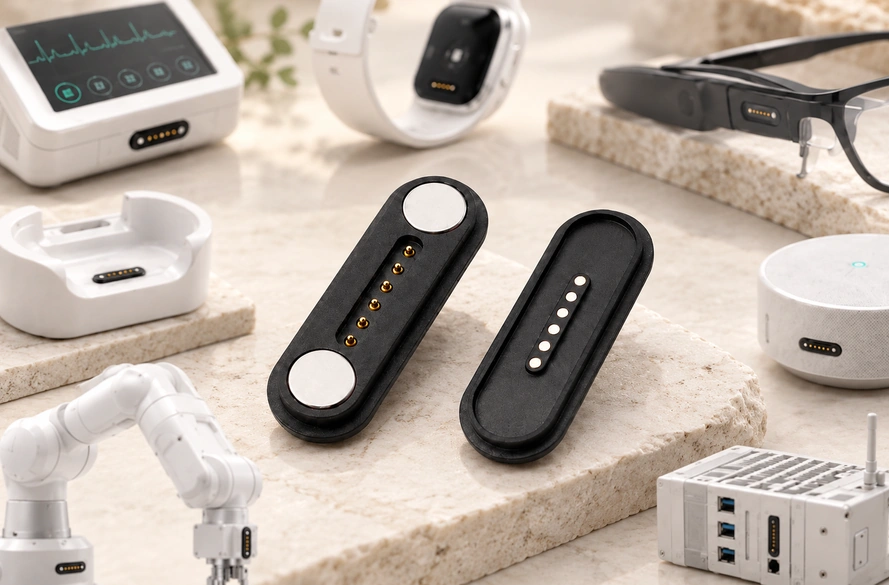
- Why Use Six Contacts?
- Medical and Healthcare Equipment
- Wearables and Portable Products
- Robotics and Industrial Systems
- Smart Home and IoT Products
- Docks Combining Power and Data
- Deciding Whether Six Pins Are Needed
Applications for a 6 pin magnetic connector include medical electronics, wearables, robotics, industrial equipment, IoT products and charging docks. Depending on the design, its six contacts can bring power, ground, data, ID detection and control signals together in a compact magnetic interface.
6 pin magnetic connectorWhy Use Six Contacts?
Six separate contacts give manufacturers more ways to assign electrical functions within one connector.
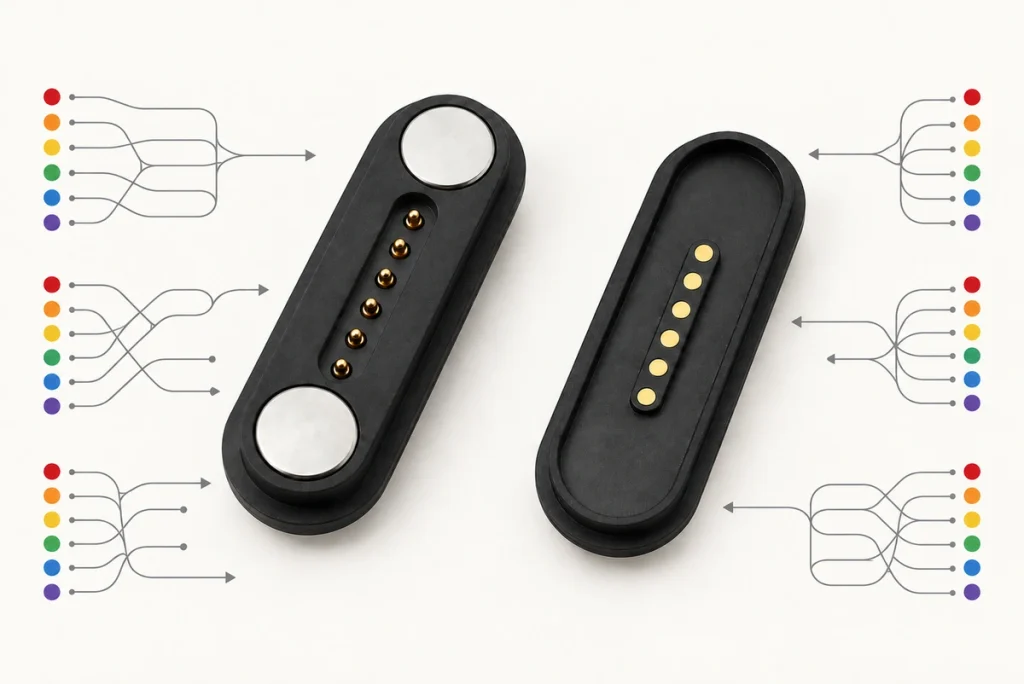
Two contacts are often sufficient for a basic positive and negative power connection. Many electronic products also need separate paths for communication, sensing, identification or charging management.
The device's design may allocate six contacts to the following functions:
Power input
Ground
Data transmission
Device identification
Charging detection
Control or auxiliary signals
There is no required universal arrangement for the six contacts in a magnetic connector. For an OEM product, the PCBA, voltage, current, communication protocol and mechanical design should guide the pin assignment.
magnetic connectorPCBAThis configurable contact layout is useful when a product needs to carry power and signals through the same magnetic connection.
Medical and Healthcare Equipment
Portable medical and healthcare electronics may benefit from a magnetic interface when users need to charge or connect the device repeatedly.

Examples of this application area include:
Portable monitoring equipment
Wearable healthcare devices
Diagnostic equipment
Charging docks
Patient monitoring accessories
Portable medical electronics
Bringing the two halves close together allows their magnetic attraction to guide them toward the mating position, which can simplify connection.
That approach may help a compact product where a conventional USB interface requires additional insertion room or repeated mechanical plugging.
Six contacts can divide charging and other functions between separate electrical paths. For instance, one group may carry power while others handle data, accessory detection or device identification.
A medical-device project still needs to assess the connector as part of the complete product. That review includes current rating, contact resistance, required mating cycles, materials, cleaning conditions and applicable regulatory requirements.
Wearables and Portable Products
Tight limits on size and external interface design make 6 pin magnetic connectors a possible choice for smart wearables.
6 pin magnetic connectors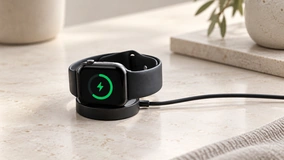
Potential wearable and portable applications include:
Smart glasses
Wearable monitoring devices
Portable electronics
Smart bands
Compact communication devices
Specialized wearable accessories
Charging may be only one requirement of a wearable interface. The product may also need data communication, firmware programming, device detection or another low-voltage signal function.
A single interface with six contacts can accommodate several of these functions in a small area.
Magnetic guidance can make routine charging easier: the user moves the cable or dock toward the device, and magnetic force helps bring the mating parts together instead of requiring insertion into a small receptacle.
For an OEM wearable, consider connector dimensions, working height, magnetic force, pin pitch, cable direction and housing structure early in the mechanical layout.
Robotics and Industrial Systems
Robotic and industrial products often use modules that undergo repeated attachment, removal, charging, testing or replacement.
These systems can use a 6 pin magnetic pogo pin connector to combine conductive contact with quick magnetic docking.
Examples in robotics and industry include:
Service robots
Portable industrial terminals
Sensor modules
Replaceable electronic modules
Test fixtures
Automation equipment
Robotic accessories
A removable robot module may need power, ground, communication and identification. Six contacts can provide those paths in an interface that docks without manually inserting a conventional plug.
Repeated attachment and removal can therefore take less time.
A magnetic connector may also help when the operator cannot easily see the mating position. Attraction guides the surfaces together, and the spring contacts accommodate small positional variations.
Industrial use may require closer attention to retention force, vibration resistance, current capacity, contamination protection and mating durability. Match these five requirements to the equipment rather than assuming a standard design is sufficient.
Smart Home and IoT Products
Many smart-home and IoT designs combine sensors, communication and rechargeable batteries in increasingly compact products.

A 6 pin magnetic connector can offer a compact connection for products such as:
Smart home controllers
IoT terminals
Sensor devices
Beauty and personal-care electronics
Portable smart appliances
Smart control modules
Charging bases
Six contacts may balance the space available with the electrical functions these products require.
For example, a design may allocate two or more contacts to power and use the others for signals or device identification.
A low-profile magnetic contact area can be integrated into the enclosure to simplify, or make less visible, the external charging interface. This can avoid the need for a larger mechanical socket in the housing.
For exposure to moisture or dust, consider the housing, seals and surface treatment together with the connector. Water protection depends on the complete connector and device structure, not on the six-contact count.
Docks Combining Power and Data
Charging docks are a useful example of six-contact interfaces when the dock needs to do more than supply charging power.
A dock's required functions may include:
Supply power
Establish ground
Detect whether the device is connected
Identify the connected product
Transfer data
Communicate with a controller
Engineers can distribute several of these functions across the six contacts of one connector.
The following is one possible allocation:
| Pin Function | Example Use |
|---|---|
| Power | Device charging |
| Ground | Electrical return |
| Data | Communication |
| Data | Communication |
| ID | Device identification |
| Detection / Control | Docking or charging control |
Scroll horizontally to view every column.
This allocation is illustrative; the product's electrical design determines the actual pin assignment.
A configurable six-contact interface can be useful in a proprietary dock where a standard USB connector does not match the required mechanical structure, docking experience or contact layout.
Deciding Whether Six Pins Are Needed
Six contacts are not necessary for every product.
Basic DC charging may only require a 2 pin magnetic connector. For power and one extra signal, a 3 pin or 4 pin design may offer a more economical option.
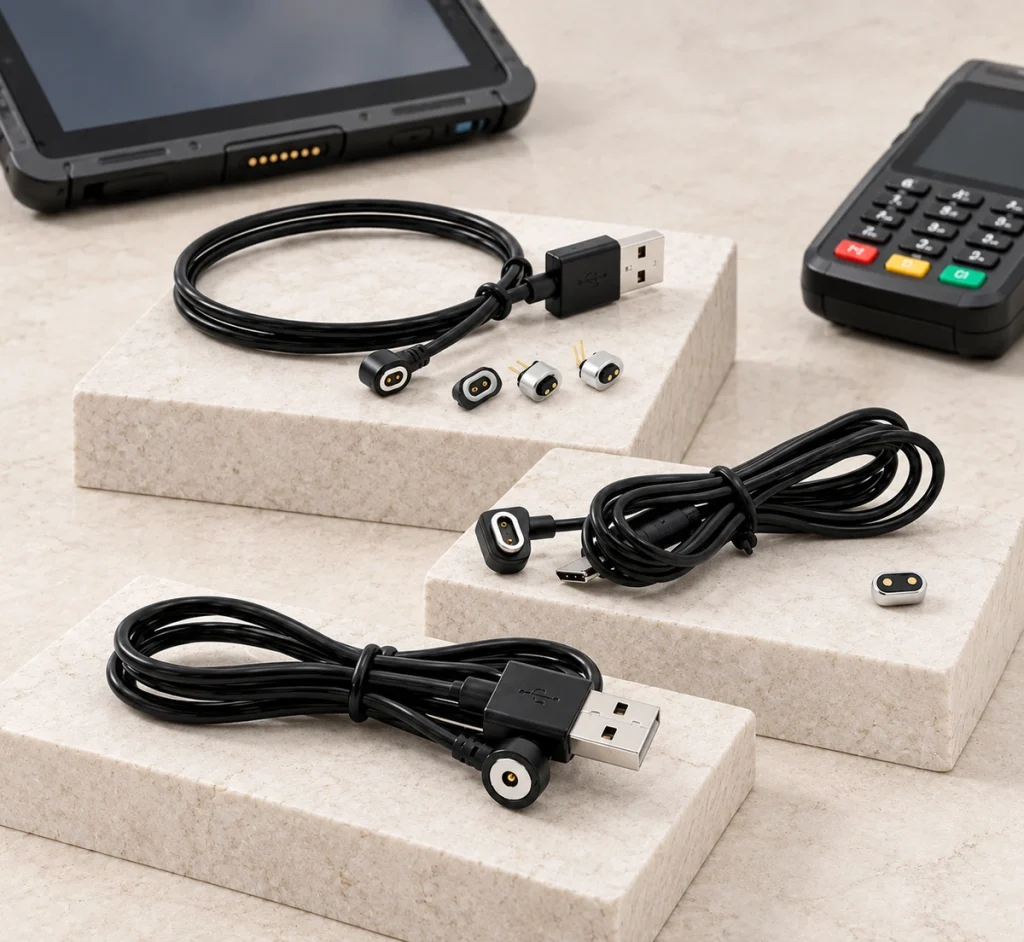
A 6 pin connector may become useful when several electrical functions must be available together.
Specify the following requirements before choosing the connector:
Required voltage and current
Number of power and signal contacts
Pin assignment
Available installation space
Required magnetic force
Working height
Expected mating cycles
Cable orientation
Waterproof requirements
PCB and housing structure
Select the contact count from the device's electrical architecture; additional pins are useful only when the design needs their functions.
Selecting a 6 Pin Magnetic Connector for a Custom Project
A custom connector needs to suit the product's electrical requirements as well as its mechanical layout.
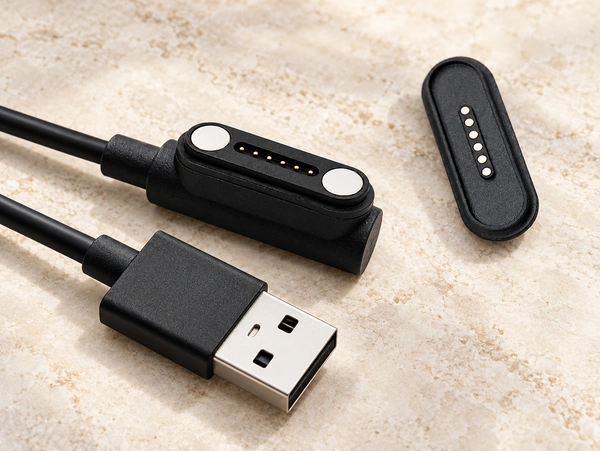
An off-the-shelf connector may not suit the existing PCBA location, enclosure thickness, cable direction or docking geometry. A custom design can then address dimensions, magnetic polarity, spring-pin working height, plating, magnetic force, cable assembly and pin assignment.
Magtor offers 6 pin magnetic connector solutions for device-side PCB integration and magnetic cable assemblies. Options cover pin definitions, working heights, magnetic forces, connector orientations and cable configurations.
MagtorTo assess a new project, provide the device drawing, installation space, required current and voltage, pin definition, cable direction and expected operating environment. These inputs help determine whether a standard 6 pin connector fits or a custom design is needed.
Matching Six Contacts to the Application
Medical devices, wearables, robotic and industrial equipment, IoT products and intelligent charging docks are application areas for 6 pin magnetic connectors. Their configurable contacts can combine functions such as power, ground, data, identification and control within a compact magnetic interface.