
IP67 or IP68? Specifying a Magnetic Connector for Water Exposure
Published on August 20, 2026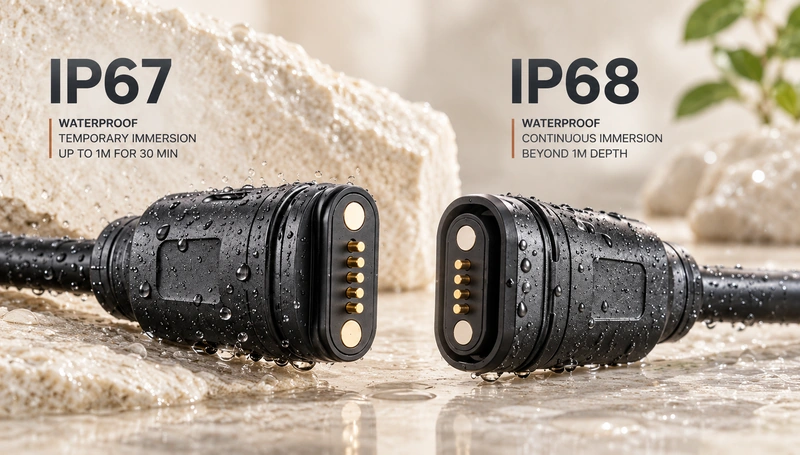
- Understanding the two ingress classifications
- Matching the immersion conditions
- Electrical and mechanical limits remain separate
- What can change the development cost
- Selecting for the actual environment
- Seven questions for the supplier
- Selection summary
IP67 and IP68 both include dust-tight classification, while their water-protection digits address different immersion conditions. IPX7 describes a specified temporary-immersion test; IPX8 uses agreed, more demanding immersion conditions. For a magnetic connector, verify the tested assembly and exposure rather than assuming the label covers every wet-use situation.
sealed magnetic connector designs| Comparison input | IP67 | IP68 |
|---|---|---|
| Dust protection | Dust-tight | Dust-tight |
| Water protection | Temporary immersion | Immersion under the specified IPX8 conditions |
| Immersion-test conditions | Common summary: about 1 m for 30 min; verify applicable test geometry and assembly | Depth, duration and conditions specified for the tested configuration |
| Possible sealing effort | Depends on the specified design | May increase for more demanding exposure |
| Possible relative cost | Depends on the specified design | May increase for more demanding exposure |
| Application considerations | Temporary immersion; rain, sweat and splashes need their own requirements | Specified extended immersion; repeat cycles and underwater operation need defined validation |
Scroll horizontally to view every column.
Understanding the two ingress classifications
The first digit, 6, classifies dust-tight protection in both IP67 and IP68. Confirm that the stated classification applies to the actual connector or assembled enclosure being selected.
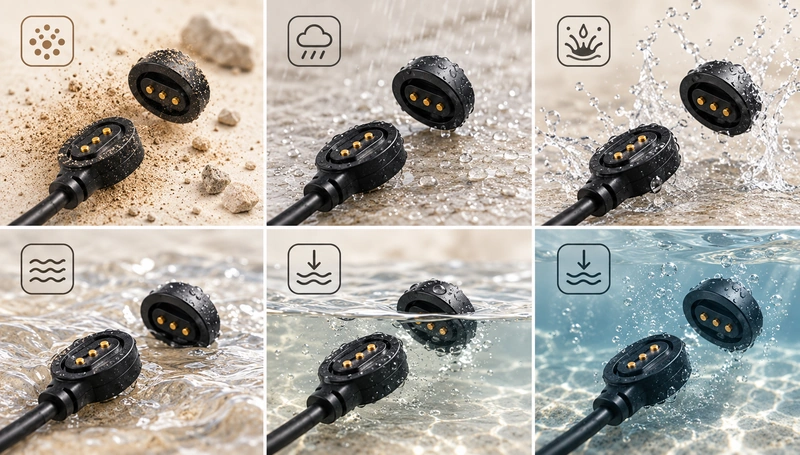
IP67 and IP68 ingress classificationsThe water-protection digit is where the classifications differ.
IPX7 is commonly summarized as temporary immersion at approximately 1 m for 30 min. The applicable standard geometry, assembly state and test conditions still need confirmation; this is not a rating promise for every magnetic part.
IPX8 uses immersion conditions specified for the tested product and more demanding than IPX7. It has no single universal depth or duration and does not mean unlimited underwater use.
Ask for more than the classification alone:
What configuration is covered by the IP68 statement?
Then establish the exposure conditions:
At what depth, for what duration and in which assembly state was it tested?
Matching the immersion conditions
Choose from the actual exposure and verified test scope, including duration, pressure and assembly state.
For an application considering IP67, define these exposures separately:
Rain exposure, with suitable spray or rainfall requirements
Sweat exposure, including chemical and corrosion requirements
Splash exposure, with the relevant water-test conditions
Outdoor moisture and humidity requirements
Accidental temporary immersion within the validated conditions
An IP68 specification may be relevant to requirements such as:
A longer specified immersion duration
A greater specified immersion depth
Repeated submersion, with a separately defined cycle test
Underwater operation within the validated assembly and operating conditions
Greater water pressure can place additional demands on O-rings, enclosure seals, cable exits and potting where used. Choose and validate the structure for the actual exposure; the label does not prescribe one sealing construction.
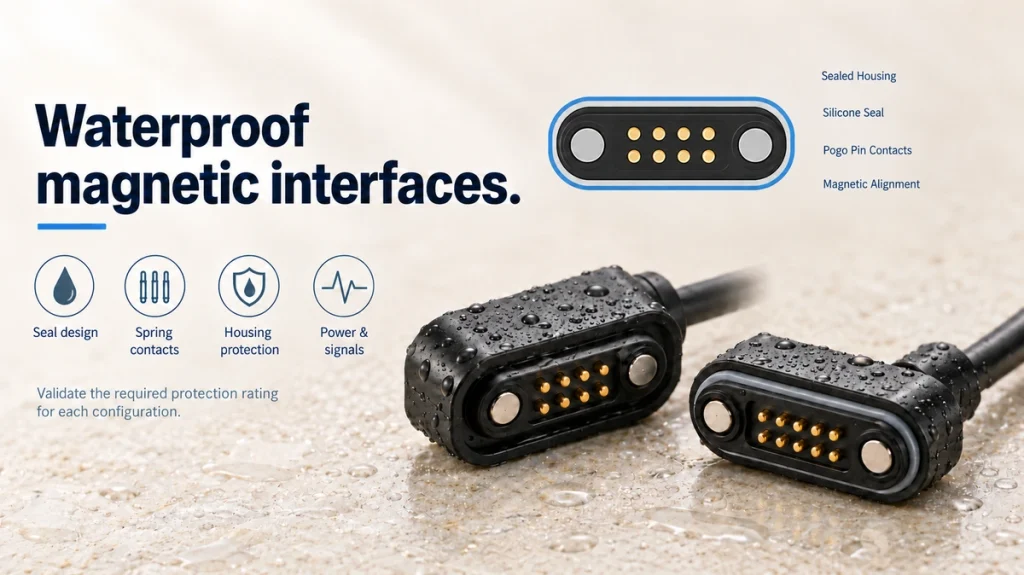
More demanding immersion conditions may require additional sealing development for the magnetic interface. Review the housing, cable exit and contact arrangement together.
magnetic contact assemblyElectrical and mechanical limits remain separate
Ingress classification alone does not establish improved electrical performance.
The IP code addresses enclosure dust and water protection. Specify these interface properties separately:
Allowable current
Allowable voltage
Contact resistance
Supported signal speed
Retention and release force
Required mating duty
An IP68 statement does not imply greater current capacity or better signal performance than an IP67 design. Compare the actual electrical specifications and test conditions.
A sealing change can also alter the mechanical mating conditions.
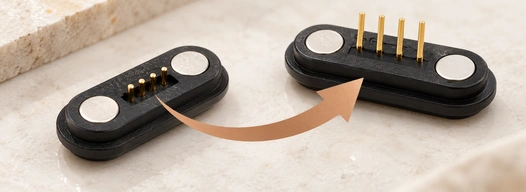
An O-ring or gasket can change the installed gap and required compression. Check the resulting spring-contact working height, travel, retention and stops across the full tolerance range.
spring-loaded contactWhat can change the development cost
A more demanding immersion specification can increase engineering and validation effort. Actual price still depends on the configuration and quotation conditions, rather than the classification alone.
Possible contributors include:
Additional sealing complexity
Tighter housing-tolerance requirements where needed
Extra sealing rings or gaskets where the design requires them
Potting or overmolding processes
Additional assembly controls
More demanding ingress-validation conditions
A particular design may combine several sealing methods instead of one ring. That is a construction choice to validate, not a universal IP68 requirement.
| Possible cost input | IP67 | IP68 |
|---|---|---|
| Sealing structure | Depends on the specified design | May require additional sealing features |
| Manufacturing tolerance | Control to the defined requirements | May need tighter control |
| Potting / overmolding | Selected where needed | May be needed for the particular configuration |
| Ingress validation | Test to the specified conditions | Test to the agreed, more demanding immersion conditions |
| Development cost | Depends on the specified design | May rise with added design and validation work |
Scroll horizontally to view every column.
Compare the cost of the actual requirements:
Engineering effort, manufacturing controls and validation determine any cost difference. A classification label does not set a fixed price premium or a required number of seals.
Selecting for the actual environment
Consider a validated IP67 configuration for the specified temporary-immersion need. Rain, sweat, splashes and outdoor exposure still require suitable separate ingress, chemical and operating requirements.
Possible applications to assess include:
Wearable products
Pet-tracking devices
Outdoor sensing equipment
Portable electronic devices
Charging cradles
Consider specified IP68 conditions where the product needs deeper or longer immersion. Repeated immersion and powered underwater use require explicitly defined validation rather than an assumption from the label.
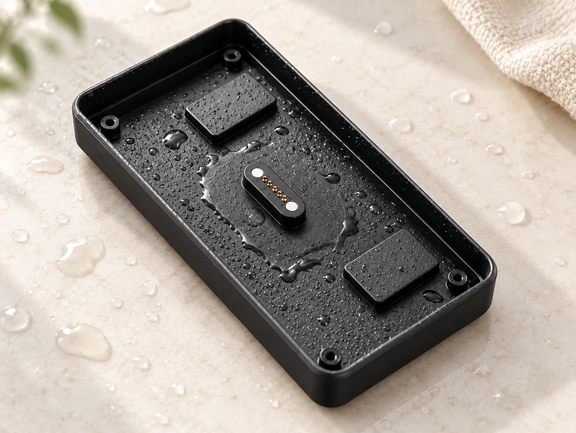
Possible applications to assess include:
Submerged sensing equipment
Marine electronic products
Water-monitoring devices
Underwater imaging equipment
Underwater robotic systems
Where more demanding immersion is not required, assess whether its extra development and verification effort brings a useful benefit. Retain every protection requirement the actual environment needs.
Seven questions for the supplier
Before selecting the mating assembly, confirm these requirements and supporting evidence:
1. What depth must the assembly withstand? State the real exposure depth and pressure conditions rather than requesting only an IP68 label.
2. How long is immersion required? A 30 min exposure and a 24 h exposure are different design requirements. Neither example establishes a universal IP68 duration.
3. Which mating state is protected? Confirm whether the evidence covers a fully mated pair, an unmated part or a fitted protective cap; do not assume those states have identical protection.
4. Does the claim cover the connector or the device? Identify the tested boundary and installation, including O-rings, enclosure and mounting, before applying it to the finished product.
5. Are saltwater, sweat or chemicals involved? Define corrosion and material-compatibility tests separately. IP68 alone does not establish resistance to those fluids.
6. What are the electrical requirements? Confirm contact count, voltage, current, resistance and signal functions independently of the ingress classification.
7. What cost and validation scope are appropriate? Request a configuration-specific quotation that meets the actual protection requirements rather than paying for an undefined higher label.
Selection summary
Select the classification and test scope for the intended conditions.
IPX7 addresses defined temporary immersion. IPX8 addresses agreed, more demanding immersion conditions. Rain, sweat, spray, chemicals and repeated wet-use cycles are separate requirements to assess for either assembly.
A more demanding exposure can add sealing features, tolerance control, testing effort and cost. The actual effect depends on the design.
Keep the independent interface limits in view:
An ingress classification does not establish a higher current, faster data path or longer mating life. Those need their own specifications and evidence.
Match the assembled connector to the exposure, electrical load, retention, spring-contact working height, device structure and cost target, then validate that exact configuration.