
Magnetic Connector Supply Chains: Regional Sourcing and Risk
Published on June 1, 2026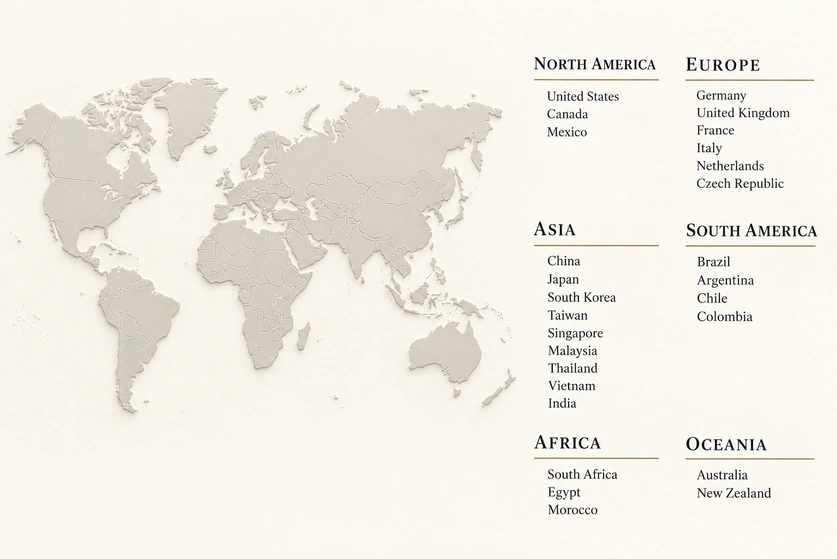
- Asia and the Expansion of Multi-country Supply Networks
- Southeast Asia in Diversified Manufacturing Plans
- Diversifying Electronic-component Suppliers
- AI and Smart Hardware: Broader Supplier Requirements
- Possible Regional Roles in Future Supply Chains
- A Global Sourcing Checklist
Magnetic-connector sourcing increasingly needs to balance cost with quality, continuity and dependable operation. This overview gives manufacturers, OEMs and purchasing teams a framework for comparing regional supply options and the capabilities needed for a reliable supply chain.
Asia and the Expansion of Multi-country Supply Networks
Asia provides an established manufacturing base for magnetic connectors and their component parts, including magnetic spring contacts, rare-earth magnet assemblies, precision stampings and cable assemblies. Mature supplier networks and the ability to manufacture at scale are central reasons to consider the region when sourcing these products.
magnetic connector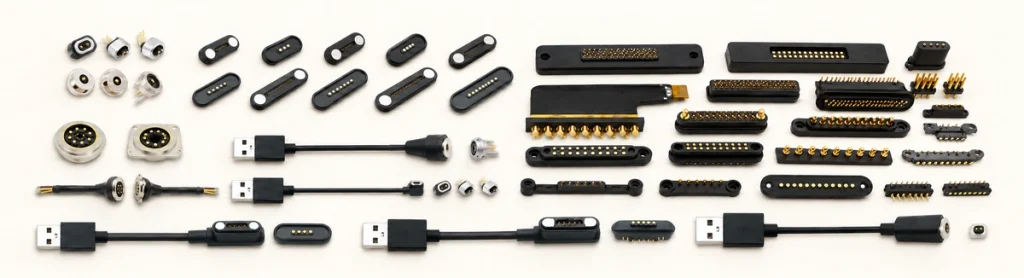
Other locations considered for expanded electronics production include:
Vietnam
Thailand
Malaysia
Mexico
Eastern Europe
China has a broad magnetic-connector supplier ecosystem. Procurement comparisons should look beyond labor rates: the depth of the industrial network, development capability, production scale and established supplier relationships can have a greater influence on the complete project.
An extensive industrial ecosystem
Fast product and tooling development
Capacity for large production volumes
Established networks of component suppliers
Southeast Asia in Diversified Manufacturing Plans
Southeast Asia is an important option in a “China Plus Many” sourcing approach, in which production and supply are spread across several locations instead of depending on one manufacturing base.
Factors Behind Regional Expansion
International manufacturing footprints — electronics production in Southeast Asia varies by product and supplier. For an actual sourcing decision, verify the current locations and capacity of each relevant supplier rather than assuming that every manufacturer is expanding at the same rate.
Labor costs — Some Southeast Asian locations can offer cost advantages relative to coastal China. The comparison depends on the specific operation and should include the complete production and logistics cost.
Manufacturing note: where local technology or material resources are more limited, a Southeast Asian facility may concentrate on final assembly and product processing. Check the actual factory’s capabilities and upstream dependencies when deciding which operations to move.
Diversifying Electronic-component Suppliers
Supplier diversification is a useful alternative to concentrating all purchasing with one source. For connectors, magnetic connectors, pogo pins, wire harnesses, PCBs and semiconductors, qualifying more than one supplier can make a procurement plan less dependent on a single production or delivery route.
Why Consider More Than One Supplier?
Consolidating orders with one large supplier can reduce purchasing costs, but it also concentrates exposure to disruption. Pandemic-related interruptions, trade-policy changes, geopolitical conflict, shipping problems and raw-material price movements illustrate the risks that a sourcing plan needs to address.
Possible Disruptions Include
Production stopping when raw materials are unavailable
Delivery schedules slipping because transport is delayed
Regional export policies changing
Unexpected factory incidents interrupting production
Sourcing note: trade rules can change within a normal purchasing cycle. Maintaining qualified alternatives in several regions gives the purchasing team options when policy changes affect a magnetic-connector supply route. Check the applicable rules before committing orders.
AI and Smart Hardware: Broader Supplier Requirements
AI smart glasses, smart wearables, service robots, medical electronics and industrial automation all create demanding requirements for electronic components. Alongside component quality, these projects need suppliers able to deliver consistently and support the product as it moves into production.
Capabilities to Evaluate for Demanding Products
Consistent delivery performance
The ability to increase production capacity
Engineering assistance and technical support
Consistency between production lots
Robotics, drones, AI hardware and other demanding products place considerable weight on the technical solution and connector reliability. Price remains relevant, but it should be assessed together with the supplier’s ability to support these requirements.
Possible Regional Roles in Future Supply Chains
| Region | Capabilities to Consider | Potential Supply-chain Role |
| China | Extensive industrial networks and large-scale manufacturing | A global manufacturing base |
| Southeast Asia | Assembly capability and potential cost advantages | An additional manufacturing base |
| United States | Technology capabilities and policy support | High-end manufacturing and defense-related supply chains |
| Europe | Automotive and industrial markets | Environmental manufacturing priorities and regional supply |
| Japan | Precision manufacturing expertise | High-end magnets and connectors |
| India | A large domestic market | An emerging manufacturing base |
| Latin America | Rare-earth resource potential | A possible raw-material supply base |
Scroll horizontally to view every column.
Regional suppliers differ in their strengths and specialization. China is an important option for magnetic-connector sourcing because of its combination of material access, technical capabilities and manufacturing cost. The best choice still depends on the actual supplier and the product requirements.
A Global Sourcing Checklist
Connector selection must reconcile electrical performance, magnetic retention, environmental protection and efficient manufacturing. Standardized spring designs, automation and qualified alternative sources are useful ways to manage a supply plan. Evaluate the specification against the application, including spring-pin consistency, plating quality, magnet corrosion protection, compliance documentation and replacement-part availability.
Regional considerations for a procurement plan
Asia-Pacific, including China, Vietnam and Southeast Asia — Consider high-volume pogo-pin connector assembly, tooling speed and cost. Additional production in Vietnam or other Southeast Asian locations can be part of a regional diversification plan; verify available capacity.
North America — Industrial, defense-related and medical projects may prioritize traceability, controlled design changes, local stock and supporting documentation. Match the supplier’s systems to the actual project requirements.
Europe — Evaluate compliance, environmental durability and lifecycle support. Repairable or modular docks and transparent supplier information can be important purchasing considerations.
Information to Request in an RFQ or Supplier Qualification
Electrical — Specify rated current, maximum contact resistance, insulation resistance and any required data rate.
Mechanical — Specify mating-cycle life, retention force, side-load limits and pin-stroke tolerances.
Materials — Identify the pogo-pin base metal, Au/Ni plating stack, magnet grade and coating.
Environment — State operating temperature, humidity, salt-mist corrosion testing and the required IP protection.
Quality — Request a PPAP-style package when applicable, CPK and GR&R information for critical dimensions, and lot traceability.
PPAPCPKSupply continuity — Review the second-source plan, regional lead times, safety stock and change-notification process.
Planning for Reliable Supply
Wearables, medical devices and rugged docking systems make both connector quality and continuity of supply important. Standardization, automation and multi-region qualification can help manage these requirements. Choose the appropriate pogo-pin arrangement, define plating and magnet coatings clearly, and qualify alternatives early to support reliable operation, predictable cost and a workable delivery plan.

To discuss a supply plan, provide the required mating cycles, IP and corrosion conditions, and current or data requirements. Magtor can review an appropriately specified magnetic connector and an alternative sourcing plan for your production schedule.
Magtor